




















When Adhesive and Fasteners Should Work Together
Some jobs need more than a fixing on its own.
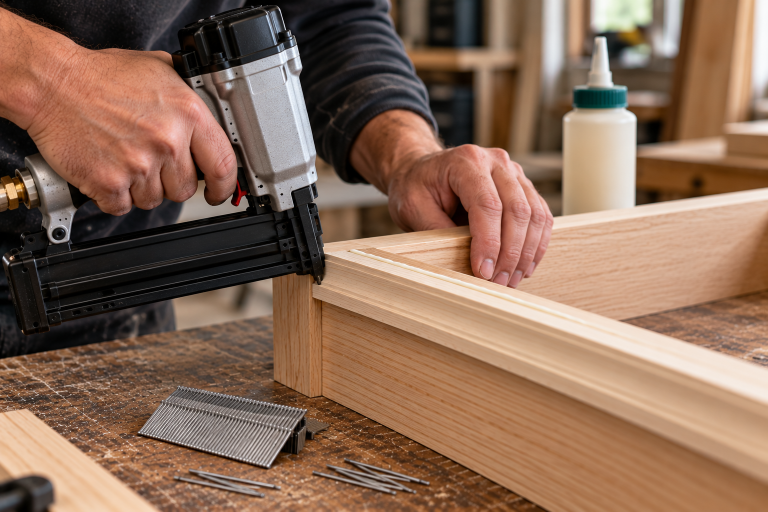
In workshop assembly, adhesive and fasteners often work best when they are used together. The adhesive gives the bond. The fastener holds the parts in position while that bond cures, adds immediate support and helps keep production moving.
This is common with cabinet backs, trim returns, beading, MDF panels, light frames and furniture components, where clamping every section can slow the job down.
At The MTK Group, we supply adhesives and collated fasteners for a wide range of trade applications, so we know the right answer is not always glue or fastener. Very often, it is both.
Different Jobs, Different Strengths
Adhesive and fasteners do different things.
Adhesive spreads strength across the joint. When the surfaces fit properly and the right adhesive is used, it can create a strong, even bond across the material.
Fasteners give immediate hold. They pull parts together, keep them aligned and allow the work to be handled sooner.
That is why the two work well together. The fastener holds the job steady. The adhesive does the longer-term bonding.
When Adhesive Needs Help
Adhesive needs time to cure.
If parts move before the bond has developed, the joint can be weakened. That is where brads, pins, nails or staples can help. They keep the material in position while the adhesive sets.
This is useful for trim, frames, panels, cabinet work, MDF, plywood and furniture assembly. In many cases, the fastener is not there to do all the holding. It is there to keep the job still while the adhesive does its work.
For production teams, that can make a real difference. Less waiting, less clamping and fewer parts moving out of line.
When Fasteners Need Help
Fasteners are quick, but they do not always give the best result on their own.
A pin may hold a small moulding in place, but it is not designed for heavy strength. A brad may be neat, but the joint may still benefit from adhesive. A staple may grip a panel well, but adhesive can help spread the load and reduce movement over time.
Using adhesive with the right fastener can also reduce the need for excessive fixing. That means fewer visible marks and a cleaner finish.
The aim is simple: use the fastener for immediate hold and the adhesive for the bond.
Brads, Pins and Adhesive
Brads are a good choice when you need a neat fixing with more hold than a pin.
They work well with adhesive on trim, beading, cabinet parts, light joinery and furniture components. The brad keeps the piece in place while the adhesive cures, which can be useful where clamps are awkward or would slow the job down.
Pins are better where the fixing mark needs to be very discreet. A fine or headless pin can hold delicate mouldings, glazing beads or small trim in place while the adhesive does the main bonding.
In both cases, the fastener should suit the finish. If the adhesive is doing the main holding, choose the smallest suitable fixing that keeps the work steady without spoiling the surface.
Staples and Adhesive
Staples are useful when you need wider grip.
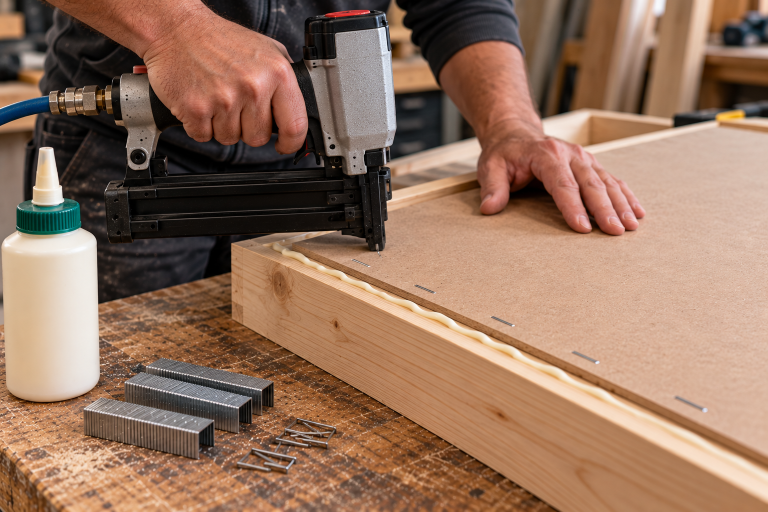
Because a staple has two legs and a crown, it can hold sheet material, panels and backs tightly to a frame. Used with adhesive, staples can help keep the panel secure while the bond develops.
This works well for cabinet backs, furniture frames, MDF, plywood, lining work and some packaging or production jobs.
The staple still needs to suit the material. If it is too heavy, too long or fired with too much pressure, it can split, crush or mark the workpiece.
MDF, Plywood and Sheet Materials
MDF and sheet materials are good examples of where adhesive and fasteners can work well together.
MDF can give a clean result, but the edges can split if the fixing is too large, too close to the edge or fired with too much pressure. Adhesive helps create a stronger bond across the joint, while the fastener holds the piece in place during assembly.
With plywood, hardboard and cabinet backs, the fastener needs enough length to bite properly into the frame beneath. Adhesive can then help reduce movement and improve the strength of the finished assembly.
This is where the full setup matters: material, adhesive, fastener, tool and pressure all need to work together.
Choosing the Right Adhesive
The adhesive should match the material, working method and environment.
PVA is commonly used for timber, MDF, plywood and general internal joinery. It is a good option where the surfaces fit well and the joint can be held together while it cures.
PU adhesive can be useful for more demanding applications, moisture-resistant work or areas where a gel adhesive is easier to control.
A flat, close-fitting internal joint may suit PVA. A more demanding or moisture-exposed application may need a D4-grade adhesive or PU option.
The fastener should hold the work in place. The adhesive should suit the joint.
Tool Setup Still Matters
Even when adhesive is being used, the fastener still needs to fire correctly.
Too little air pressure can leave the fixing sitting proud. Too much pressure can overdrive it, damage the surface or weaken the fixing point.
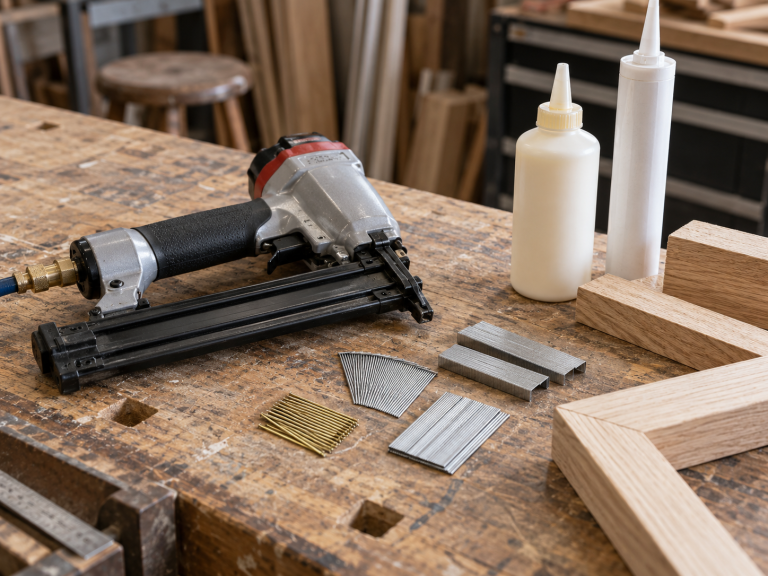
The fastener also needs to match the tool. Brads, pins, staples and nails all have specific requirements around length, gauge, crown width, collation and compatibility.
If a fixing is not seating properly, do not assume more pressure is the answer. Check the fastener, tool, material and setup first.
Do Not Use Fasteners to Hide a Poor Joint
A fastener can hold parts together while adhesive cures, but it cannot fix poor preparation.
If the surfaces are dusty, uneven, loose or badly cut, the adhesive may not bond properly. If there are gaps in the joint, the fastener may pull the pieces together in one area while leaving weak contact elsewhere.
Good results still start with clean material, accurate cuts, the right adhesive and the right fixing.
That matters even more in visible joinery, furniture production and repeat workshop assembly, where small issues can show across a whole batch.
A Simple Way to Think About It
Use adhesive and fasteners together when the job needs both long-term bond strength and immediate hold.
Use pins with adhesive for delicate trim and discreet fixing.
Use brads with adhesive for trim, beading, cabinet work and light assembly.
Use staples with adhesive for panels, backs, frames and sheet material where wider grip is useful.
The adhesive bonds. The fastener holds. The finished job stays cleaner and more secure.
Final Thoughts
Adhesive and fasteners should not always be treated as separate choices.
In many workshop jobs, they work better as a system. The adhesive gives the bond, while the fastener keeps the material in place and helps production move smoothly.
Choosing the right combination can reduce rework, improve finish quality and create a more reliable fixing.
At The MTK Group, we help trade users choose adhesives, brads, pins, staples, nails and pneumatic tools that suit the job. If you are unsure which combination is right for your material or application, speak to us.
Get in touch with our team on 0333 8000 345, email [email protected], or DM us on social media @theMTKgroup.