























Common Fixing Mistakes in MDF and How to Avoid Them
MDF is one of the most widely used materials in joinery, furniture manufacturing, shopfitting and interior fit-out work.
It is smooth, consistent, easy to machine and ideal for painted finishes. But when it comes to fixing, MDF needs the right approach. It does not behave the same way as natural timber, and using the wrong fastener, wrong length or wrong tool setup can quickly lead to splitting, weak hold, surface damage or blow-through.
For busy workshops and site teams, these problems cost time. A poor fixing can mean extra filling, sanding, rework or even replacing the panel completely.
In this guide, we’ll look at some of the most common fixing mistakes in MDF and how to avoid them.
1. Using Fixings That Are Too Long
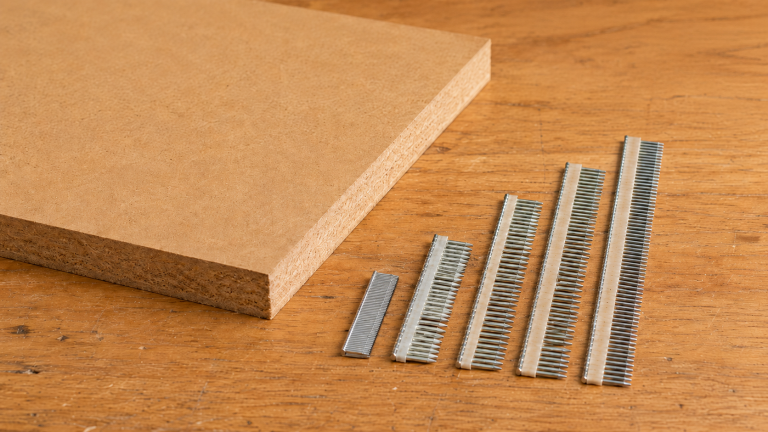
One of the most common mistakes when fixing MDF is choosing a nail, pin or staple that is too long for the material.
MDF does not have grain in the same way as timber. It is made from compressed fibres, which means fixings can split the edge, blow through the back, or create bulging if the length is not right.
This is especially common with thinner MDF, decorative panels, cabinet backs, trims and edge work.
What to check:
- Thickness of the MDF
- Whether the fixing is going into the face or edge
- What material sits behind it
- Whether the back face is visible
- Tool drive depth or air pressure
- Whether adhesive is also being used
As a general rule, the fixing should be at least double the thickness of the material being fixed. In some cases, you may go slightly longer for extra holding power, but too much length can create problems, especially with thinner MDF or visible finished surfaces.
2. Fixing Too Close to the Edge
MDF is particularly vulnerable at the edges.
Fixing too close to the edge can cause the material to split, swell, crumble or bulge. This is a common issue when fixing trims, cabinet components, MDF frames or decorative panels.
Unlike timber, MDF edges do not have long fibres to help hold the fixing together. The compressed fibres can break apart if the fastener is driven too close to the edge or with too much force.
How to avoid it:
- Keep fixings a sensible distance from the edge
- Use a finer gauge fastener where possible
- Reduce the drive force or air pressure
- Avoid overdriving the fixing
- Use adhesive to support the joint
- Test first on an offcut if the MDF is thin or delicate
For visible finish work, it is often better to use a finer pin or brad alongside adhesive rather than relying on a heavier fixing too close to the edge.
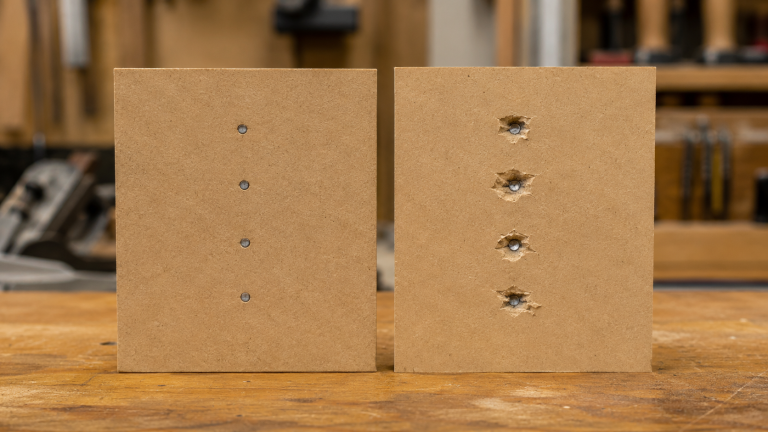
3. Using Too Much Air Pressure
For pneumatic tools, air pressure has a big impact on MDF fixing quality.
Too much pressure can overdrive the fixing, crush the surface, create a deep hole or cause the fastener to blow through the material. Too little pressure can leave the fixing proud and create extra finishing work.
The aim is to drive the fixing cleanly, not aggressively.
What to check:
- Is the pressure set within the tool’s recommended range?
- Are fixings sitting flush or being buried too deep?
- Is the surface denting around the fixing?
- Are nails or pins blowing through the back?
- Is the MDF thinner than usual?
Use the lowest pressure that drives the fixing cleanly and consistently. This helps protect the surface and gives a neater finish, especially on painted MDF, wall panels, cabinet parts and decorative trims.
4. Choosing the Wrong Gauge
The gauge of the fixing matters.
A thicker brad nail may provide more holding power, but it can also leave a more visible hole or increase the risk of splitting. A finer pin may give a cleaner finish, but it should not be relied on for structural strength.
This is where the application matters.
As a simple guide:
- 18g brad nails are useful where more holding strength is needed
- 21g pins are useful for lighter trims and cleaner fixing
- 23g headless pins are best for discreet positioning and fine finish work
- Staples can be useful for backs, panels, linings and sheet applications
For MDF, the best fixing is not always the strongest-looking one. The right choice depends on whether you need strength, positioning, speed or a clean finish.
If the fixing is only holding the work in place while adhesive cures, a fine pin may be enough. If the fixing needs to provide more mechanical hold, a brad or staple may be more suitable.
5. Relying on Pins Alone for Strength
Pins are useful in MDF, but they have limits.
Fine pins and headless pins are often used for neat finish work, especially where the fixing point needs to be discreet. However, they should not be treated as a structural fixing.
In many joinery and furniture applications, pins are best used alongside adhesive. The pin holds the component in place while the adhesive cures. The adhesive then provides the long-term bond.
Use pins with adhesive for:
- Lightweight trims
- Decorative beading
- Mitred returns
- Small mouldings
- Cabinet details
- Fine finish work
Using pins alone where strength is required can lead to movement, loose trims and callbacks
6. Not Using Adhesive Where It Is Needed
MDF bonds well with the right adhesive, and in many applications, adhesive should be part of the fixing method.
This is especially true for decorative trims, panels, furniture components and joints where long-term hold matters. Mechanical fixings can hold the material in position, but the adhesive often provides the main strength.
Adhesive is useful when:
- Fixing trims to MDF panels
- Holding components while pins or brads position them
- Assembling cabinet parts
- Working with mitres or returns
- Reducing reliance on visible fixings
- Improving long-term joint strength
The key is to use the right adhesive for the job and allow the proper curing time. Rushing the process or relying only on small pins can weaken the final result.
7. Ignoring Surface Finish
MDF is often used because it gives a smooth painted finish. That means fixing marks matter.
Overdriven nails, large brad holes, surface dents and damaged edges can all create extra filling and sanding. This slows down production and affects the quality of the finished work.
For painted MDF, consider:
- Smaller gauge fasteners where suitable
- Correct drive depth
- Consistent air pressure
- Clean tool setup
- Adhesive support where needed
- Testing on an offcut before final fixing
A clean fixing at the start saves time later in the finishing process.
8. Using the Wrong Tool or Fastener Combination
Even the right fixing can perform badly if it is not compatible with the tool.
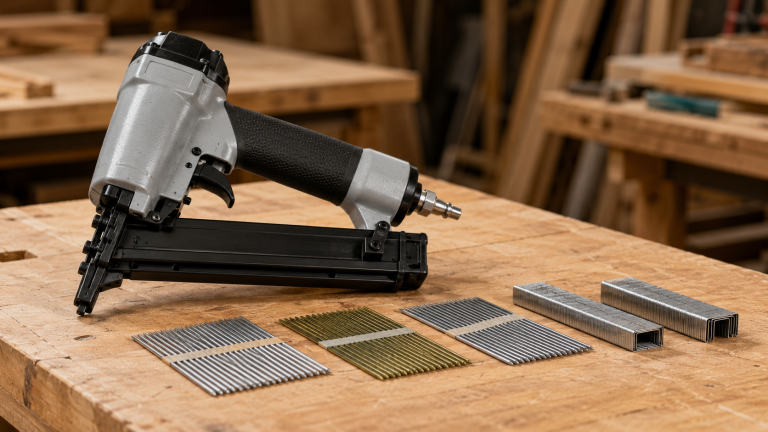
Staplers are designed to take specific fastener lengths, gauges, crown sizes and collation types. Using the wrong fastener can cause jams, misfires, poor feeding or inconsistent drive depth.
Before ordering fixings for MDF work, check:
- Tool model
- Accepted fastener length
- Gauge or wire size
- Crown width for staples
- Collation type
- Application and material thickness
For repeat workshop use, getting this right matters. The wrong combination can slow production, damage tools and create avoidable waste.
Quick MDF Fixing Checklist
Before fixing into MDF, ask:
- How thick is the MDF?
- Am I fixing into the face or edge?
- Is the fixing length suitable?
- Am I too close to the edge?
- Is my air pressure too high?
- Do I need a brad, pin, headless pin or staple?
- Is adhesive needed for long-term strength?
- Will the fixing mark affect the finish?
- Is the fastener compatible with my tool?
- Have I tested the setup on an offcut?
These checks can prevent many of the most common MDF fixing problems.
Final Thoughts
MDF is a reliable and versatile material, but it needs the right fixing approach.
The most common mistakes come from using fixings that are too long, fixing too close to the edge, applying too much pressure, choosing the wrong gauge, or relying on pins where adhesive is needed.
For the best results, match the fixing to the material thickness, application, finish and tool setup. Use adhesive where long-term strength is required, and always test on an offcut if the MDF is thin, finished or close to an edge.
At The MTK Group, we help trade professionals choose the right fasteners, adhesives and tool setup for MDF, timber, sheet materials and workshop applications.
If you are unsure which brads, pins, staples or adhesive are right for your MDF work, our team is here to help.
Get in touch with our team on 0333 8000 345, email [email protected], or DM us on social media @theMTKgroup.