


















PVA vs. PU Adhesive: Which One Should You Use?
Not every wood adhesive behaves the same once it leaves the bottle.
Some spread easily across flat timber joints. Some stay where they are placed. Some are designed for clean internal joinery, while others are better suited to exterior work, damp conditions or awkward vertical applications.
That is where the difference between PVA adhesive and PU adhesive matters.
For joiners, cabinet makers, shopfitters, furniture manufacturers and workshop teams, both products have their place. The key is understanding what each adhesive is designed to do, how it behaves during application, and which grade is right for the environment.
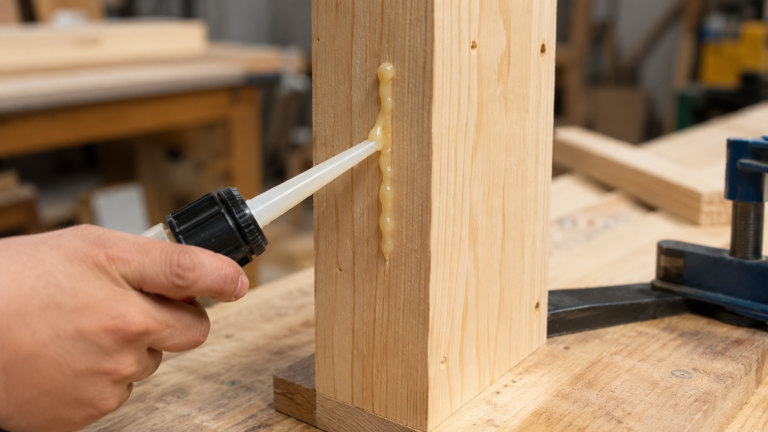
A simple starting point is this: PVA is generally runnier, while PU is available as either a liquid or a gel. PU gel is often preferred on vertical surfaces because it stays in place better, while runnier PVA can drip down the workpiece if the surface is upright.
But there is more to it than consistency. You also need to understand D3 vs D4 PVA, waterproofing, set times, curing behaviour and material suitability.
What Is PVA Adhesive?
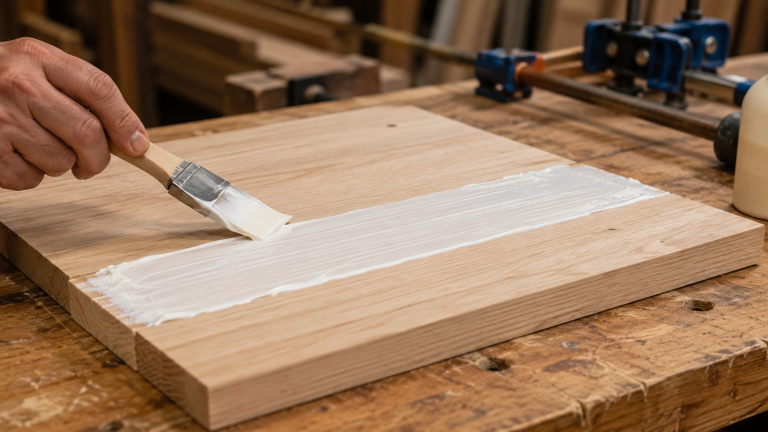
PVA stands for polyvinyl acetate. In trade use, it is commonly known as wood glue and is widely used for bonding timber, MDF, plywood, chipboard and other porous wood-based materials.
PVA is popular because it is easy to spread, works well on tight-fitting joints, cleans up with water before curing, and is practical for everyday workshop use.
PVA adhesives are classified in water-resistance grades, commonly referred to as D1, D2, D3 and D4 under EN 204-type classifications. In real trade use, D1 and D2 are rarely the focus. The two grades most people are concerned with are D3 and D4. D3 is typically used for interior applications where some moisture or humidity may be present, while D4 is used where a higher level of water resistance is required.
In simple terms:
- D3 PVA: usually best for internal joinery and areas with occasional moisture or humidity
- D4 PVA: used where stronger water resistance is required, including more demanding or exterior applications
- D1 and D2 PVA: exist, but are not commonly the main choice for professional joinery and trade use
This is where confusion can start. Some D3 adhesives are described as water-resistant, but water-resistant does not mean fully waterproof. For external or highly moisture-exposed work, D4 is usually the safer grade to consider. D4 is recognised as the higher water-resistance class and is commonly used where exterior exposure or frequent moisture is more likely.
What Is PU Adhesive?
PU adhesive, also known as polyurethane adhesive, is a moisture-curing adhesive used in timber, joinery and wider construction applications.
Unlike PVA, PU adhesive cures into a harder, foamed structure. This slight foaming action can help fill small gaps and uneven surfaces, but it also means the adhesive needs to be applied carefully. Too much PU adhesive can expand out of the joint and create extra clean-up. Some manufacturer guidance describes PU adhesives as foaming slightly on application and offering D4 water resistance.
PU adhesive is usually considered D4 grade, making it suitable for applications where water resistance is important. It is commonly available in two main physical forms: PU liquid adhesive and PU gel adhesive.
It is also available in different setting times, with 5-minute and 30-minute options being common trade choices. Some PU adhesives are specifically sold as 5-minute or 30-minute products, with fast setting and D4 water resistance depending on the product.
The Main Difference: PVA Is Runny, PU Can Be Gel or Liquid
One of the biggest practical differences is how the adhesive behaves during application.
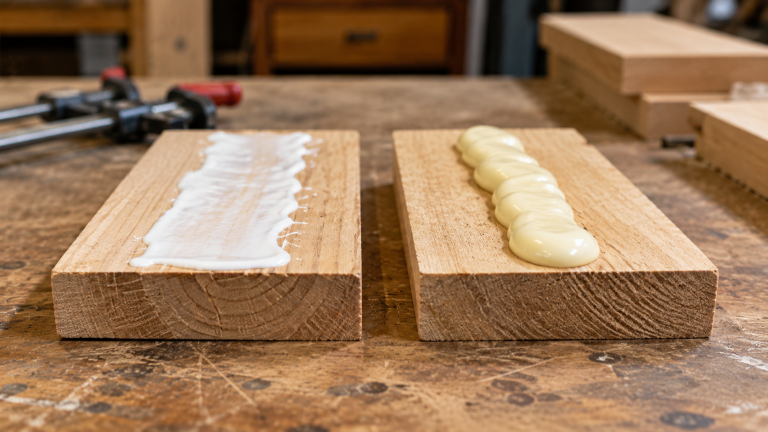
PVA is runny and always will be.
That is part of why it spreads so easily across flat timber joints. It is ideal when you are working on a bench, clamping flat components, laminating panels or bonding well-fitting timber pieces.
PU can be liquid or gel.
Liquid PU can be useful for wider application areas, while PU gel is particularly useful where the adhesive needs to stay in place. This makes gel PU a good option for vertical surfaces, upright timber faces, awkward joints or places where runny PVA would drip down before the joint is closed.
Simple trade rule:
- For flat, tight-fitting internal timber joints: D3 PVA is often suitable
- For internal work needing stronger moisture resistance: D4 PVA may be considered
- For exterior or highly moisture-exposed work: D4 adhesive is usually the better direction
- For vertical surfaces where adhesive must not run: PU gel is often more practical
- For faster grab and quicker handling: 5-minute PU may be useful
- For more working time: 30-minute PU may be more suitable
When Should You Use PVA Adhesive?
PVA is often the practical choice for clean, close-fitting timber joints in controlled workshop conditions.
Use PVA when:
- You are bonding wood to wood
- The joint is flat and close-fitting
- The work is mainly internal
- You need an easy-to-spread adhesive
- You want simple water clean-up before curing
- You are working with furniture, cabinetry, MDF, plywood or general joinery
For many workshops, D3 PVA is the everyday internal choice. It gives useful water resistance for internal joinery, but it should not be treated as fully waterproof. Where a higher water-resistance requirement exists, D4 PVA is the stronger option.
PVA is especially useful where the surfaces fit well and proper clamping can be achieved.
When Should You Use PU Adhesive?
PU adhesive is useful when the job is more demanding, the surface is awkward, or the adhesive needs to stay in place.
Use PU adhesive when:
- You are bonding on a vertical surface
- You need a gel adhesive that will not drip easily
- The application is awkward or difficult to clamp neatly
- The work may face moisture exposure
- You are bonding timber to certain other building materials
- You need faster setting, such as 5-minute or 30-minute options
- Small gaps or uneven surfaces need better filling
PU adhesives are often described as suitable for wood and a range of other common building surfaces, depending on the product. Some products also highlight internal and external use, fast set times, D4 water resistance and slight foaming action.
However, PU is not always the right answer. Because it foams and hardens as it cures, it needs controlled application. Too much adhesive can squeeze out and leave a hard residue that may need trimming or cleaning back.
5-Minute vs 30-Minute PU Adhesive
Setting time matters, especially in busy workshops or on site.
A 5-minute PU adhesive is useful when speed is important and the joint can be assembled quickly. It can help when you need fast handling or when the work process is repetitive and controlled.
A 30-minute PU adhesive gives more working time. This can be better for larger components, more complex assemblies or jobs where alignment takes longer.
Use 5-minute PU when:
- The joint is simple
- You can position and clamp quickly
- Speed is important
- You are working on smaller assemblies
Use 30-minute PU when:
- The job needs more adjustment time
- The components are larger
- The assembly is more complex
- You need a more controlled working window
The best choice depends on the size of the job, the working conditions and how quickly the joint can be closed and clamped.
Common Mistakes to Avoid
Treating all PVA as the same
Not all PVA adhesives are equal. D3 and D4 have different moisture-resistance levels, so it is important to choose the grade that suits the environment.
Assuming water-resistant means waterproof
D3 PVA may be water-resistant, but that does not make it the same as D4. For exterior or high-moisture applications, D4 is usually the safer choice.
Using runny PVA on vertical surfaces
PVA can drip on upright surfaces before the joint is closed. For these applications, PU gel may be easier to control.
Applying too much PU adhesive
PU cures hard and can foam. Over-application can create messy squeeze-out and extra finishing work.
Ignoring open time
A 5-minute adhesive gives speed, but less adjustment time. A 30-minute adhesive gives more flexibility but may slow the process slightly.
Quick Comparison: PVA vs PU Adhesive
| Feature | PVA Adhesive | PU Adhesive |
| Main forms | Liquid / runny | Liquid or gel |
| Common grades | D3 and D4 most relevant | Usually D4 |
| Best for | Flat, close-fitting timber joints | Vertical surfaces, awkward joints, moisture-prone work |
| Water resistance | Depends on D grade | Typically D4 water resistance |
| Clean-up | Easier before curing | Harder once cured |
| Cure behaviour | Dries as adhesive film | Cures hard and can foam slightly |
| Setting options | Usually slower than fast PU | Often available in 5-minute and 30-minute options |
| Key watch-out | Can run or drip | Can expand and squeeze out |
Final Thoughts
PVA and PU adhesives both have an important place in professional woodworking, joinery and workshop applications.
For flat, close-fitting internal timber joints, PVA adhesive is often the simple and practical option. For most trade users, the important distinction is between D3 PVA for internal water-resistant applications and D4 PVA where a higher level of water resistance is needed.
For vertical surfaces, awkward applications, exterior-grade requirements or faster setting times, PU adhesive may be the better choice. PU is available as both liquid and gel, with gel being particularly useful where you need the adhesive to stay in place instead of running down the material.
The right adhesive depends on the material, surface position, moisture exposure, set time, clamping method and finish required.
At The MTK Group, we help trade professionals choose the right adhesive, fixing and tool setup for the job. If you are unsure whether PVA, D3, D4, PU liquid or PU gel is right for your application, our team can help you make the right choice.
Get in touch with our team, on 0333 8000 345, email [email protected], or DM us on social media @theMTKgroup, we’ll make sure you’re set up to keep production moving.