























Why Staples Fail: The Common Causes Behind Weak Holding Power
A staple can look like it has gone in properly and still fail later.
For trade users, that is a problem. Loose fabric, moving panels, weak crate assembly, poor holding in timber or repeated rework can all slow the job down and cost more than the staple itself.
When staples fail, the cause is not always obvious. It could be the staple type, leg length, crown width, air pressure, tool condition, material or even where the staple has been placed.
The answer is not always to use a bigger staple or turn the pressure up. The better approach is to match the staple, tool and material properly from the start.
At The MTK Group, we help trade users choose staples and staplers that suit the job, whether that is upholstery, furniture, panels, packaging, pallets, crates or general workshop assembly.
The Staple Type Does Not Suit the Job
One of the most common reasons staples fail is simple: the wrong staple has been used for the application.
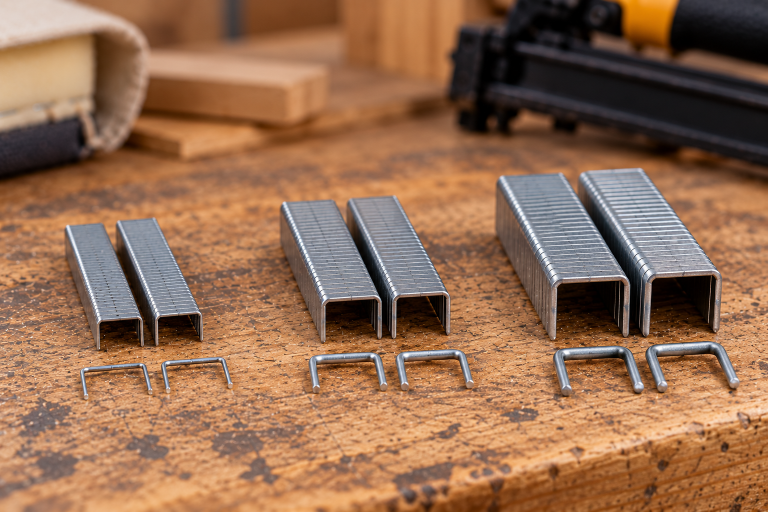
Fine wire staples are useful where the finish matters. They are commonly used for upholstery, fabric, foam, leather and lighter trim work because they leave a cleaner mark and are less likely to damage delicate material.
Medium wire staples offer more holding power and are often used for furniture frames, panels, light timber assembly and general workshop work.
Heavy wire staples are better suited to demanding applications such as packaging, crates, pallets and heavier timber work where strength matters more than a discreet finish.
If the wire is too light, the staple may not grip strongly enough. If the wire is too heavy, it can split, crush or mark the material.
This is why staple choice should start with the job, not just the tool already on the bench.
The Leg Length Is Wrong
Staple length has a direct effect on holding power.
If the legs are too short, they may not bite deeply enough into the base material. The staple may look seated, but it will not have enough grip underneath.
This often happens when fixing through layers. For example, fabric over foam onto a timber frame, hardboard onto a cabinet back, or thin sheet material onto a softwood frame. The staple has to pass through the top material and still have enough length left to anchor properly.
But too long can also cause problems.
A staple that is too long may bend, hit resistance, blow through the other side, split the edge or fail to seat cleanly. In thinner materials, it can leave sharp points exposed or damage the finished piece.
The right staple length should give enough bite without damaging the workpiece.
The Air Pressure Is Too High or Too Low
Air pressure has a big impact on how staples perform.
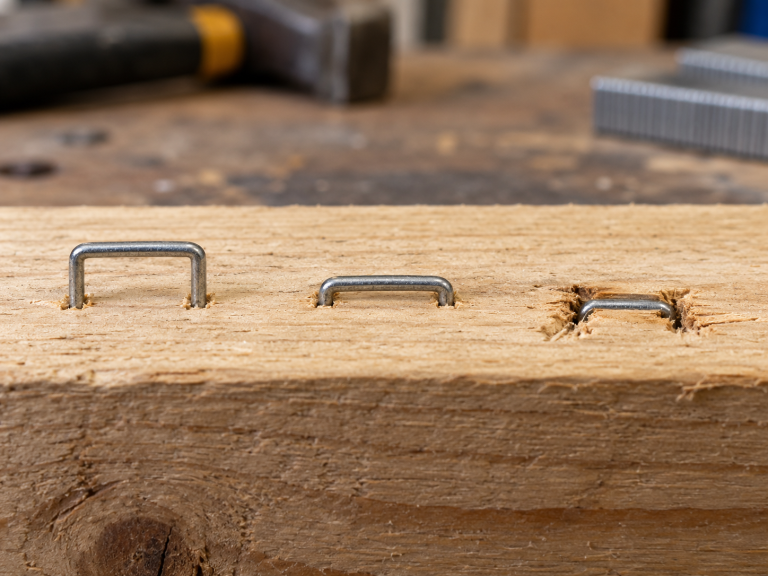
If the pressure is too low, staples may sit proud. They might not pull the material tight, and the fixing can feel weak straight away.
If the pressure is too high, staples can overdrive. The crown may cut into the material, crush the surface or weaken the fixing point.
This is common in upholstery and panel work. A staple that is driven too hard can tear fabric, sink too far into soft timber or break the surface of MDF and sheet materials.
More pressure is not always the answer.
The aim is to use enough pressure to drive the staple cleanly and consistently, without damaging the material or putting unnecessary strain on the tool.
The Staple Is Not Seating Properly
A staple needs to sit correctly to hold properly.
If it sits proud, it may not clamp the material down. If it is overdriven, the crown can cut into the surface instead of holding it.
For cabinet backs, panels and frames, this can leave the material loose even though staples are visible. For upholstery, it can allow fabric or webbing to move over time. For packaging and crates, it can reduce the strength of the assembly.
A good staple should sit firm and secure, with the crown holding the material without crushing it.
If the seating is inconsistent, check the pressure, staple length, material and tool condition before changing everything else.
The Material Is Working Against the Staple
The same staple will not perform the same way in every material.
Soft timber may not give enough resistance if the staple is too light or too short. Hard timber may resist the staple and stop it seating properly. MDF can split or crumble near edges if the fixing is too large or fired too hard. Thin sheet material can pull away if the staple has not gripped into the frame beneath.
Upholstery materials can also vary. Fabric, leather, vinyl and foam all behave differently depending on thickness, tension and backing material.
That is why real testing matters.
A staple that works well on one production run may not perform the same way when the material, frame or board changes.
Poor Placement Can Weaken the Fixing
Even the right staple can fail if it is placed badly.
Staples fired too close to an edge can split timber or tear sheet material. Staples spaced too far apart may not spread the load evenly. Staples fired at an angle may not grip cleanly.
This is often seen in faster production work, especially on cabinet backs, crate assembly, furniture frames and upholstery jobs where speed can lead to inconsistent placement.
A good staple pattern helps the fixing do its job.
For example, when fixing a panel back to a timber frame, evenly spaced staples around the edge will usually hold better than random fixings placed only where the material has lifted. In upholstery, consistent spacing helps keep tension even across the fabric.
The Staple Series Does Not Match the Tool
Staplers are designed for specific staple series, crown widths, wire gauges and leg lengths.
If the staple does not match the tool properly, it may feed badly, jam, misfire or drive inconsistently. Even if the staple looks close, small differences in series or size can cause problems.
That can lead to weak holding power because the staple is not being driven cleanly or consistently.
Before blaming the staple or the material, check the tool compatibility. The correct staple series matters.
The Tool Needs Cleaning or Servicing
A worn or poorly maintained stapler can make a good staple perform badly.
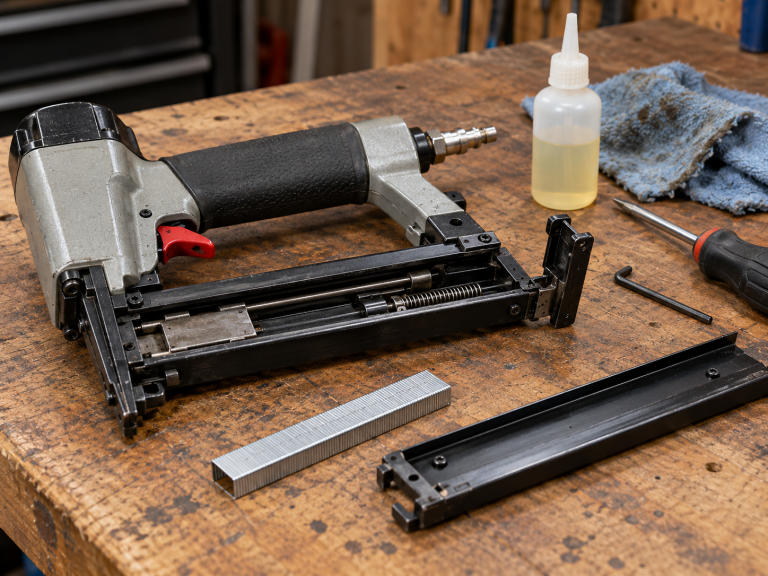
A dirty magazine, worn driver blade, tired seals or inconsistent air supply can all affect how the staple fires. The result may be proud staples, uneven drive depth, jams or weak holding.
This is especially important in busy workshops and production environments where the tool is used all day.
If the same staple and material used to work well but the results have changed, the tool may be the issue.
Cleaning, lubrication, servicing or repair can often solve problems that look like fastener failure.
Staples Are Being Used for the Wrong Job
Staples are useful, but they are not right for every fixing.
Some jobs may need a brad, nail, screw or adhesive instead. In other cases, staples may work best as part of a system, holding the material in place while adhesive provides the longer-term bond.
This is common in panels, frames and workshop assembly, where the staple provides immediate hold and adhesive helps spread the bond across the joint.
The best fixing is not always the strongest-looking one. It is the one that suits the material, tool and application.
Quick Checks When Staples Are Not Holding
If staples are failing, start with the basics.
- Is the wire type right for the job?
- Is the staple long enough to grip the base material?
- Is it too long for the thickness being fixed?
- Is the crown width suitable?
- Does the staple series match the tool?
- Is the air pressure too high or too low?
- Is the staple seating cleanly?
- Is the material splitting, crushing or pulling away?
- Is the tool clean and firing consistently?
Most staple failures come back to one of these points.
Final Thoughts
When staples fail, there is usually a practical reason.
Weak holding power can come from the wrong staple type, poor leg length, incorrect air pressure, poor placement, tool wear, material issues or tool compatibility problems.
The solution is not always to go bigger or increase the pressure. In many cases, the better answer is to choose the correct staple and set the tool up properly for the material.
At The MTK Group, we supply staples, staplers and fastening advice for upholstery, furniture, joinery, packaging, pallets, crates and production work.
If your staples are not holding properly, speak to us. We can help you check the staple type, tool compatibility and setup so the fixing works as it should. Get in touch with our team on 0333 8000 345, email [email protected], or DM us on social media @theMTKgroup.