























Fine Wire, Medium Wire or Heavy Wire Staples: Which One Do You Need?
Not every staple is designed to do the same job.
Some staples are made to give a clean, discreet finish in fabric or trim. Others are designed to give a stronger hold in timber, packaging or heavier materials. Choose the wrong one, and you can end up with poor holding power, damaged surfaces, jams or a finish that does not look right.
That is why it helps to understand the difference between fine wire, medium wire and heavy wire staples.
At MTK, we supply staples for a wide range of trade applications, from upholstery and furniture making through to joinery, packaging, pallets, crates and construction work. The right staple depends on the material, the level of hold required and the tool being used.
What Does Staple Wire Type Mean?
When people talk about fine wire, medium wire or heavy wire staples, they are referring to the thickness and strength of the wire used to form the staple.
The wire type affects how the staple performs.
A finer wire gives a neater finish and causes less disruption to the surface. A heavier wire gives more strength and holding power, but it can also leave a more visible fixing point and may need a more powerful stapler.
This is why there is no single “best” staple.
The best staple is the one that suits the job.
Fine Wire Staples
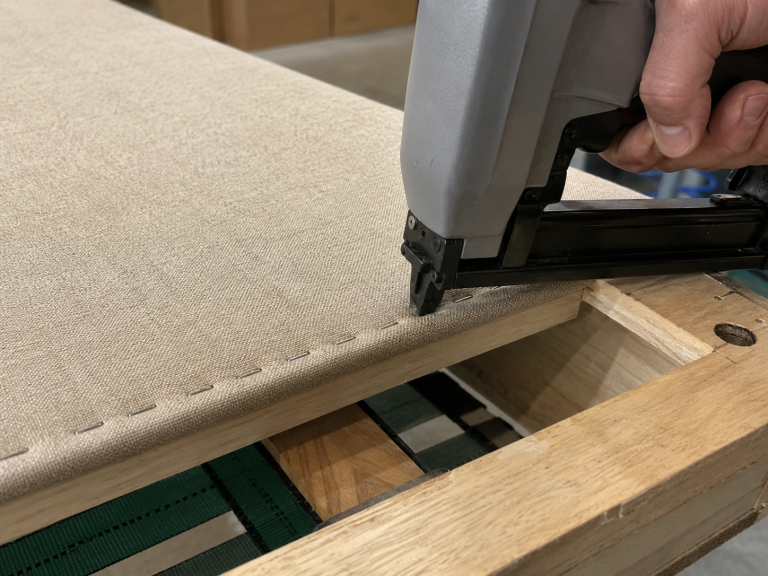
Fine wire staples are designed for applications where a clean finish matters.
Because the wire is thinner, the staple is less visible once fired. It also causes less damage to softer or more delicate materials. This makes fine wire staples a popular choice for upholstery, fabric, display work, light trim and furniture applications.
They are often used where the staple needs to hold material in place without cutting, tearing or marking it too aggressively.
Typical uses include:
- Upholstery work.
- Fabric fixing.
- Light trim.
- Foam and padding.
- Leather and vinyl work.
- Furniture backs and panels.
- Display and decorative work.
Fine wire staples are useful where appearance is important, but they are not usually the right choice for heavy-duty fixing. If the material needs a stronger mechanical hold, a fine wire staple may not provide enough grip.
Medium Wire Staples
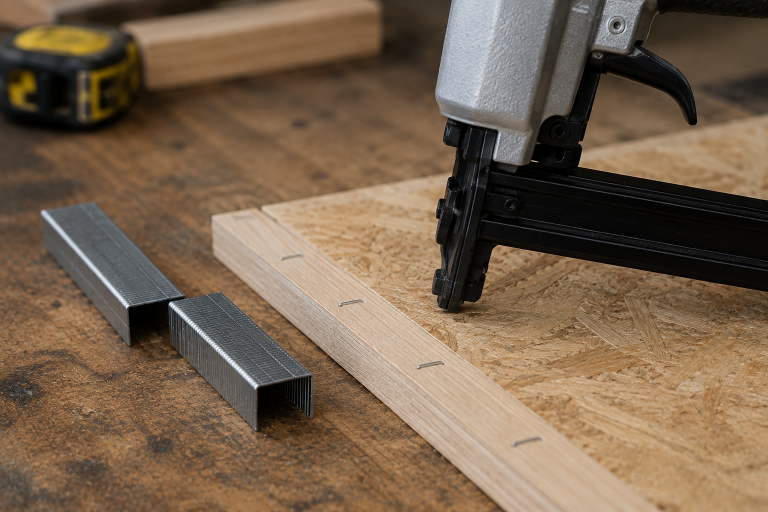
Medium wire staples sit between fine wire and heavy wire.
They offer more strength than a fine wire staple while still being suitable for general fixing work where the finish needs to remain reasonably neat.
This makes them a good option for many trade users who need a balance between appearance and holding power.
Medium wire staples are often used in furniture making, light timber fixing, shopfitting, panelling, packaging, insulation, lining work and general workshop applications.
Typical uses include:
- Furniture assembly.
- Light timber fixing.
- Cabinet backs.
- Panelling.
- Shopfitting.
- Insulation and lining.
- General packaging.
- Light crate work.
Medium wire staples are often the practical choice when fine wire is not strong enough, but heavy wire would be too aggressive for the material.
Heavy Wire Staples
Heavy wire staples are designed for strength.
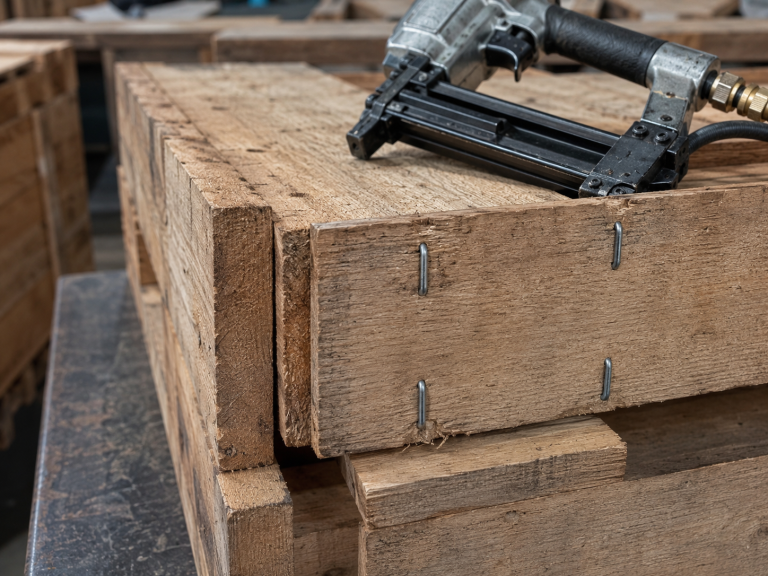
The wire is thicker, which gives the staple more holding power and makes it better suited to tougher materials. These staples are commonly used where the fixing needs to resist movement, pull-out or heavy handling.
They are often used in packaging, pallets, crates, timber assembly, fencing, garden buildings and construction-related applications.
Typical uses include:
- Pallets.
- Crates.
- Timber packaging.
- Garden buildings.
- Fencing.
- Heavy-duty timber fixing.
- Construction applications.
- Industrial assembly.
Heavy wire staples are not chosen for subtlety. They are chosen because the fixing needs to hold.
Because they are stronger and thicker, they usually require a suitable heavy-duty stapler. Using heavy wire staples in the wrong tool can lead to jams, misfeeds or tool damage.
Why the Material Matters
The material you are fixing into makes a big difference.
A staple that works well in softwood may not perform the same way in hardwood, MDF, plywood, chipboard, plastic, foam or fabric. Softer materials may be damaged by a staple that is too heavy. Denser materials may not hold properly if the staple is too light.
For upholstery, fabric and foam, a fine wire staple is often preferred because it gives a cleaner finish and reduces the risk of tearing or marking.
For timber, packaging and general workshop use, medium wire or heavy wire may be more suitable depending on the level of hold required.
For pallets, crates and outdoor timber work, a heavier staple may be needed to cope with handling, movement and load.
The material should guide the staple choice, not just the tool.
Holding Power and Finish
Staple choice is always a balance between holding power and finish.
Fine wire staples are better when you want a discreet fixing.
Heavy wire staples are better when you need strength.
Medium wire staples sit in the middle.
If the staple is too light, it may pull out or fail under pressure. If it is too heavy, it may damage the surface, split the material or look too visible for the job.
This is especially important in furniture, upholstery and visible joinery, where the fixing needs to do its job without spoiling the finish.
Leg Length Still Matters
Wire type is only one part of the decision.
The leg length also needs to be right.
A staple needs enough length to pass through the top material and bite properly into the base material. If it is too short, it may not hold. If it is too long, it may come through the other side, bend, split the material or create an untidy finish.
For softer materials, a shorter leg may be enough. For thicker layers, timber or heavier work, a longer leg may be needed.
The right staple is a combination of wire type, crown width and leg length.
Tool Compatibility Is Essential
Staples must match the stapler.
Even if a staple looks similar, small differences in crown width, wire size, leg length or series can cause problems. The wrong staple can jam the magazine, misfeed, damage the driver blade or fail to fire correctly.
This is especially important with pneumatic staplers, where fasteners are being fired repeatedly at speed.
Before changing staple type, check:
- The correct staple series.
- Crown width.
- Leg length range.
- Wire type.
- Tool model compatibility.
- Air pressure setup.
If a tool starts jamming after changing staples, the staple specification should be one of the first things checked.
Do Not Use Air Pressure to Force the Wrong Staple
Air pressure can affect how a stapler drives, but it cannot make the wrong staple right.
If a staple is too heavy for the tool, too long for the material or the wrong series for the magazine, increasing the pressure may only hide the problem for a short time. It can also increase tool wear, overdrive the staple or damage the material.
The better approach is to choose the correct staple and then set the air pressure so the staple drives cleanly and consistently.
For pneumatic staplers, start within the manufacturer’s recommended pressure range and adjust gradually based on the material and fixing.
Quick Guide: Which Staple Should You Use?
As a simple guide:
Use fine wire staples when the finish matters and the material is lighter or more delicate.
Use medium wire staples when you need a balance between clean fixing and general holding strength.
Use heavy wire staples when strength, durability and holding power are the priority.
For upholstery and fabric, fine wire is often the better option.
For furniture, panelling, shopfitting and general workshop work, medium wire may be more suitable.
For pallets, crates, packaging and heavy timber work, heavy wire is usually the stronger choice.
Final Thoughts
Choosing between fine wire, medium wire and heavy wire staples is not just about size. It is about the job the staple needs to do.
Fine wire staples give a cleaner finish for lighter and more delicate materials. Medium wire staples offer a practical balance for general fixing. Heavy wire staples provide more strength for demanding applications where holding power matters most.
Using the right staple helps reduce jams, protect the material, improve the finish and keep the tool working properly.
At The MTK Group, we help trade users choose staples that match the tool, material and application. Whether you are working with upholstery, furniture, packaging, pallets, crates or timber, our team can help you find the right staple for the job.
Get in touch with our team on 0333 8000 345, email [email protected], or DM us on social media @theMTKgroup.