























Does Cold Weather Affect Wood Glue? A Workshop Guide
Cold weather can affect more than just the temperature in your workshop. It can also affect how your wood adhesive performs.
As temperatures fall, adhesives may become harder to apply, curing times can increase and, in some cases, the strength of the finished bond can be affected.
For joiners, cabinet makers, furniture manufacturers and garden building workshops, this can mean longer production times, weaker joints and unnecessary rework.
Understanding how temperature affects the adhesive you are using can help avoid these problems and keep production moving through the colder months.
Why Temperature Matters When Using Wood Glue
Wood glue needs the right conditions to form a reliable bond.
Temperature affects how easily adhesive spreads, how quickly it cures and how long a joint needs to remain supported.
In colder conditions, some adhesives become thicker and harder to apply evenly. The bond may also take longer to develop enough strength for handling or further assembly.
For example, a cabinet frame that normally comes out of the clamps after a set period may need longer in a cold workshop.
It is also important to consider the temperature of the timber itself, not just the air around it.
What Happens to PVA Adhesive in Cold Weather?
PVA adhesive is widely used for timber, MDF, plywood, furniture assembly and general joinery.
Because PVA is water-based, low temperatures can affect how it forms a bond.
If the adhesive, timber or working environment is too cold, the glue may not form a proper film as it dries. In some cases, this can result in a weak or chalky glue line.
The minimum working temperature depends on the product. For example, Everbuild 502 Wood Adhesive, which MTK supplies, should not be applied below 10°C, according to its manufacturer’s guidance.
This is especially important in workshops that are unheated overnight or where adhesives are stored separately from the main working area.
Remember, D3 and D4 refer to water resistance, not cold-weather performance. A D4 adhesive is not automatically suitable for use at lower temperatures.
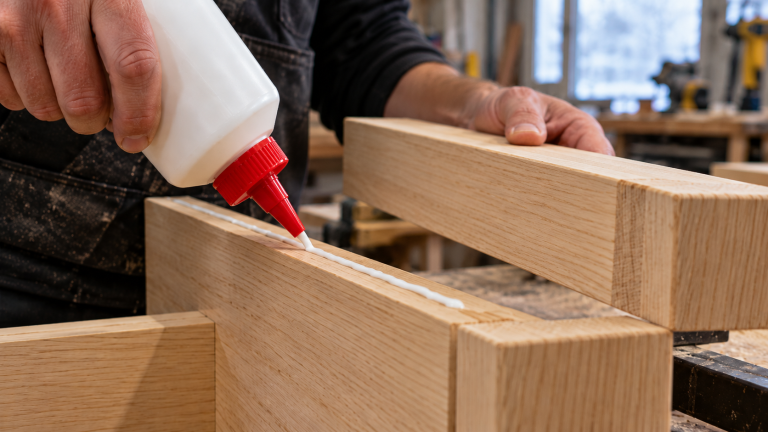
Does PU Adhesive Perform Better in the Cold?
PU adhesive behaves differently from PVA.
Polyurethane adhesives typically cure through a reaction with moisture. They are commonly used for timber, joinery, garden building production and applications where higher water resistance is required.
However, PU adhesives are not unaffected by cold weather.
Lower temperatures can slow curing, and each product has its own recommended application range. Some PU adhesives can be applied at temperatures as low as 5°C, but this does not apply to every formulation.
Even fast-setting PU adhesives may take longer to develop strength in colder conditions.
The right choice depends on the material, working temperature, moisture conditions and application, rather than simply choosing PU because the weather is colder.
Cold Timber Can Be Part of the Problem
One thing that is easy to overlook is the temperature of the material being bonded.
Timber stored in a cold warehouse, outside or in an unheated building may remain cold even after being brought into a warmer workshop.
Applying adhesive to cold timber can affect bonding, particularly if the surface is below the product’s recommended application temperature.
Moisture is another consideration.
When cold timber is moved into a warmer, humid environment, condensation can form on the surface. This may interfere with bonding, especially where clean, dry surfaces are required.
For production teams, allowing materials to reach suitable working conditions before assembly can help prevent inconsistent results.
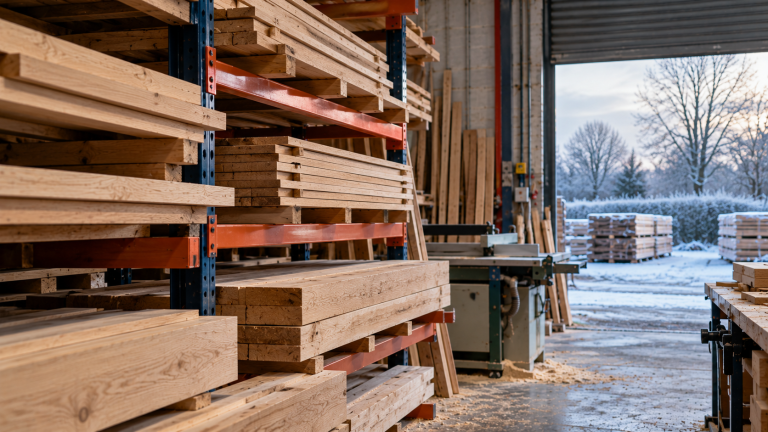
How You Store Your Adhesive Matters
Cold-weather problems can begin before the glue is even applied.
Imagine a container of PVA left overnight in an unheated warehouse or delivery van. By the next morning, the adhesive may be too cold for immediate use.
Bringing it into a warmer workshop does not necessarily mean it is ready to use straight away. The adhesive needs to reach a suitable temperature before application.
Water-based adhesives such as PVA should generally be protected from freezing. Depending on the formulation, freezing can permanently affect the adhesive’s consistency and performance.
It is worth distinguishing between normal product separation and possible freezing damage.
Some PVA adhesives may show slight separation during storage and can be mixed again in accordance with the manufacturer’s instructions. However, persistent lumps, an unusually grainy texture or a consistency that does not recover after warming may indicate damage.
If you suspect an adhesive has frozen, check the manufacturer’s guidance before using it.
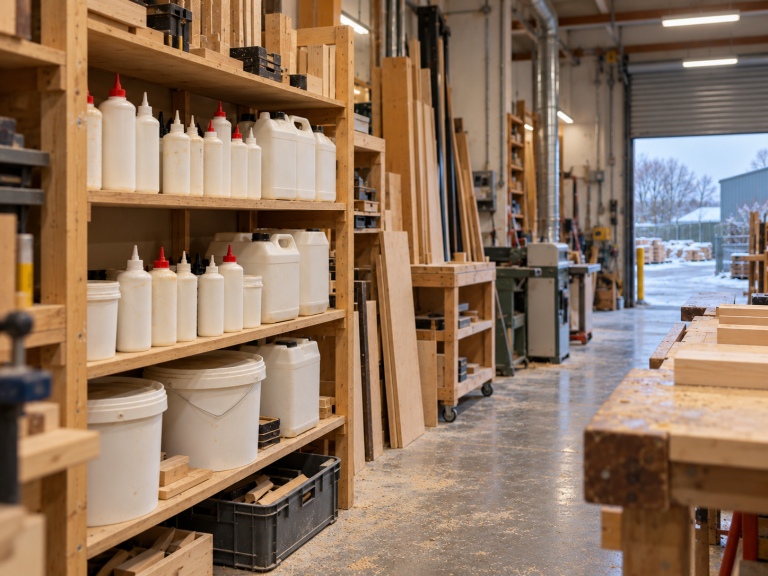
For workshops storing larger containers, including 5-litre and 25-litre supplies, maintaining suitable storage conditions can help reduce waste and avoid inconsistent bonding.
Do Not Rush the Curing Process
In busy workshops, time matters.
But colder conditions may mean glued joints need longer before they are ready to be handled, machined or put under load.
This is particularly important when assembling timber frames, cabinet components and MDF panels, where moving a joint too early can disturb the developing bond.
Using collated fasteners alongside adhesive can help hold components in position during assembly.
Brads, pins and staples can provide immediate mechanical hold while the adhesive develops strength, but they do not remove the need to follow the adhesive manufacturer’s curing recommendations.
A joint that feels secure enough to handle is not necessarily fully cured.
A Few Winter Workshop Checks
As temperatures start dropping, a few simple habits can help keep adhesive work consistent.
- Check the manufacturer’s minimum application temperature.
- Store adhesives away from freezing conditions.
- Allow cold timber and adhesive to reach suitable working temperatures.
- Check surfaces for condensation, dirt or excess moisture.
- Allow enough clamping and curing time before handling assemblies.
- Do not assume a D4 or fast-setting adhesive is automatically suitable for cold conditions.
Small changes to storage and working conditions can help prevent bigger problems later in production.
Final Thoughts
Cold weather does affect wood glue, but it does not have to affect the quality of your finished work.
Choosing the right adhesive is only part of the job. Storage conditions, timber temperature and curing time all play a role in achieving a reliable bond.
For joinery, furniture manufacturing, cabinet assembly and garden building production, getting these basics right can make a real difference during the colder months.
At The MTK Group, we supply a range of PVA and PU adhesives for trade applications, alongside the fasteners and tools used in everyday workshop assembly.
If you are unsure which adhesive suits your material or working conditions, our team can help you find the right option.
Get in touch with our team, on 0333 8000 345, email [email protected], or DM us on social media @theMTKgroup, we’ll make sure you’re set up to keep production moving.