


















Why Cheap Fasteners Can Cost More in the Long Run
A cheaper fastener only saves money if it performs properly.
Once it starts causing jams, damaged materials, failed fixings or lost production time, the saving can disappear very quickly. For trade users buying nails, staples, pins or brads in volume, the lowest price per box is not always the lowest cost to the business.
In busy workshops and on site, fasteners need to feed cleanly, drive consistently and hold properly in the material. If they do not, the result is usually more downtime, more waste and more frustration.
At MTK, we know that the right fastener is not just the one that fits in the tool. It is the one that works reliably in the tool, suits the material and performs as expected on the job.
The Real Cost Is Not Always on the Box
When comparing fasteners, it is easy to focus only on the upfront price.
That makes sense when you are buying in bulk. But if the fastener causes regular problems during use, the cost of the box becomes only part of the story.
Poor fasteners can lead to:
- Jams and misfeeds.
- Bent nails or staples.
- Weak holding power.
- Inconsistent drive depth.
- Rust staining.
- Damaged material.
- Extra tool wear.
- Rework and delays.
For joiners, furniture makers, upholsterers, fencing contractors, shed manufacturers, pallet makers and fit-out teams, these issues affect productivity as much as product quality.
A few pounds saved on fasteners can quickly be lost if the team is stopping to clear jams or correct poor fixing.
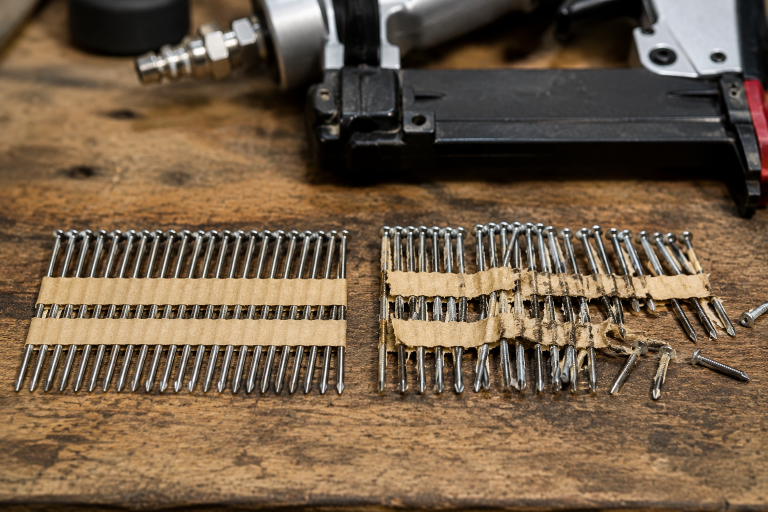
Poor Collation Causes Downtime
Collated fasteners need to move through the tool smoothly.
Whether you are using strip nails, coil nails, staples, brads or pins, the collation has to hold the fasteners in the correct position long enough for the tool to feed and fire properly.
If the collation is weak, brittle, uneven or poorly made, the tool may not feed the next fastener correctly. This can cause jams, misfires or inconsistent firing.
That matters even more in high-volume environments. A workshop producing garden buildings, pallets, furniture frames or packaging cannot afford repeated stops throughout the day.
Every jam means the operator has to stop, disconnect or make the tool safe, clear the issue, reload and start again. Repeated over a shift, that downtime can cost far more than the saving made on the fasteners.
Compatibility Is More Than Length
One of the most common mistakes is assuming that a fastener will work because it looks similar.
Length is only one part of compatibility.
The fastener also needs to match the tool’s specification for gauge, crown width, collation angle, collation type, head shape and shank type. If one of these details is wrong, the fastener may feed badly or put extra strain on the tool.
This is where problems often start after switching supplier or trying a cheaper alternative.
A nail may be the right length but the wrong collation angle. A staple may be close in size but not quite right for the magazine. A pin may fit into the tool but fail to drive consistently.
The result is usually the same: lost time, poor finish and avoidable tool problems.
Holding Power Still Matters
A fastener that fires cleanly still needs to hold.
For timber frames, garden buildings, fencing, crates, pallets, upholstery frames and joinery work, the fixing has to suit the application. If the shank type, wire gauge, staple crown or leg length is wrong, the fixing may not provide the strength needed.
In some jobs, a smooth shank nail is enough. In others, an annular ring shank nail may be needed for extra pull-out resistance. With staples, crown width and leg length can make a real difference to how well the material is secured.
The right fastener is not always the most expensive one. It is the one that suits the tool, material and level of hold required.
Cheap Finish Choices Can Cause Problems Later
Fastener finish is another area where the wrong choice can cost more later.
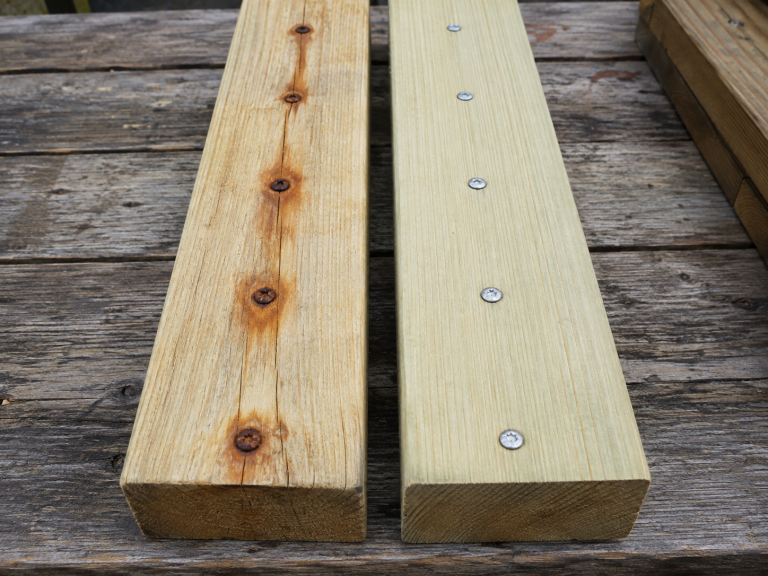
Bright nails and staples may be suitable for dry internal work, but they are not usually the right choice for outdoor timber or damp conditions. If the fixing is exposed to moisture, treated timber or changing weather, corrosion can appear quickly.
That can lead to rust staining, poor appearance and reduced long-term performance.
For outdoor timber projects, galvanised, hot dipped galvanised or stainless steel fasteners may be needed depending on the environment and timber type. Cedar, for example, should be fixed with stainless steel to reduce the risk of staining and corrosion.
Choosing the wrong finish may reduce the upfront cost, but it can create visible problems and callbacks later.
Poor Fasteners Can Affect the Tool
Fasteners and tools work as a system.
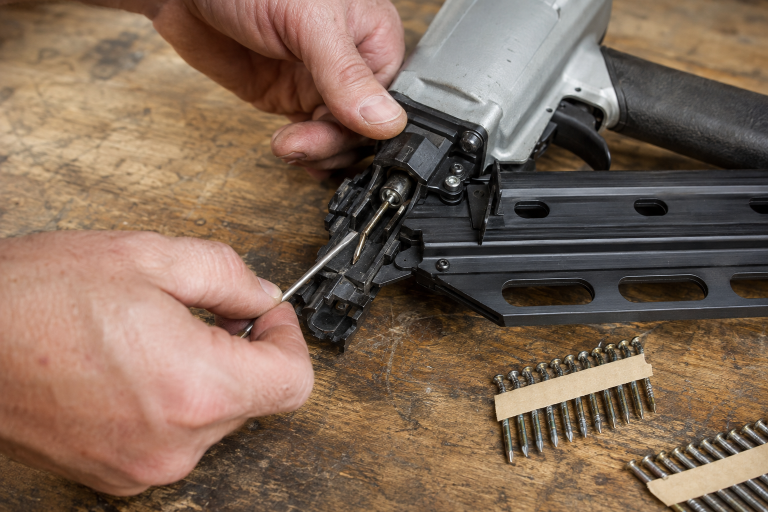
If the fastener is badly collated, slightly out of tolerance or made from inconsistent material, the tool has to work harder to feed and drive it. Over time, this can contribute to wear around the magazine, nose, driver blade and internal parts.
Users may also try to compensate by increasing air pressure. That might help the fastener drive in the short term, but it can increase tool wear, overdrive fixings and damage the finished surface.
If a tool starts jamming after a fastener change, the tool may not be the problem. The fastener may be the first thing to check.
What to Look for in a Reliable Fastener
A reliable fastener should be consistent, compatible and suitable for the job.
Before buying in volume, it is worth checking:
- Is it correct for the tool?
- Does it feed smoothly?
- Is the collation strong and consistent?
- Is the finish suitable for the environment?
- Is the shank, wire or crown type right for the application?
- Does it provide enough holding strength?
- Has it been tested in the actual material?
These checks are simple, but they can prevent downtime, waste and unnecessary repairs.
Final Thoughts
Cheap fasteners can look like a saving, but the true value depends on how they perform in real working conditions.
If they feed poorly, jam the tool, damage materials, fail to hold or corrode too quickly, they can cost more in the long run. For trade users, workshops and production teams, reliability matters just as much as price.
The aim is not always to buy the most expensive fastener. It is to buy the right fastener for the tool, material and application.
At The MTK Group, we help customers choose fasteners that work properly in real trade environments. From collated nails and staples to brads, pins and corrosion-resistant finishes, our team can help you match the right fixing to the job.
Get in touch with our team on 0333 8000 345, email [email protected], or DM us on social media @theMTKgroup.