






















Tool Maintenance Habits That Extend the Life of Your Nailers and Staplers
For many trade professionals, nailers and staplers are used every day without much thought, until they stop working properly.
A tool that starts misfiring, jamming or losing power can slow down the job, waste fasteners and create unnecessary downtime. In busy joinery workshops, upholstery businesses, construction teams and production environments, that downtime quickly becomes costly.
The good news is that many common tool problems can be reduced with simple maintenance habits.
Looking after your nailers and staplers does not need to be complicated. A few regular checks can help extend tool life, improve firing consistency and reduce the chance of avoidable repairs.
1. Keep the Tool Clean
Dust, timber fibres, broken collation material and general workshop debris can build up around the nose, magazine and feed system.
Over time, this can affect how smoothly fasteners move through the tool. It can also increase the chance of jams, weak firing or inconsistent performance.
After regular use, check:
- The nose area
- Magazine rails
- Fastener feed path
- Trigger area
- Air inlet connection
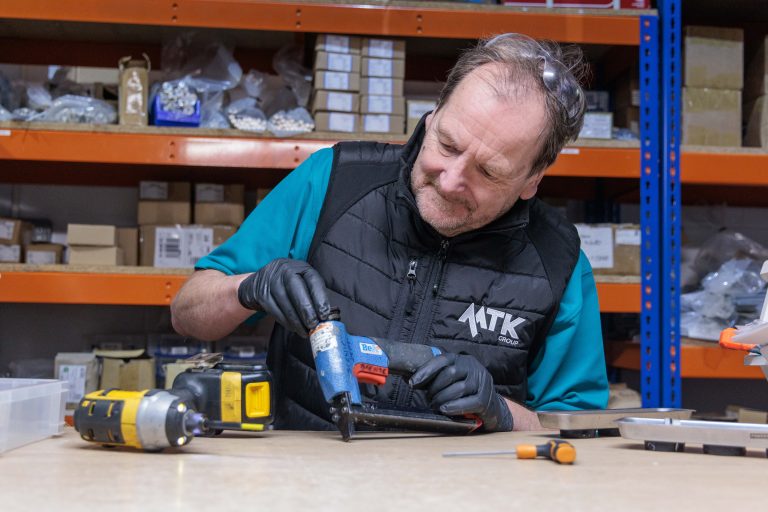
A quick clean at the end of the day can make a noticeable difference, especially for tools used heavily in MDF, timber, packaging or upholstery work.
2. Use the Correct Fasteners
Tool maintenance is not only about cleaning and oiling. Using the wrong fasteners can also damage the tool over time.
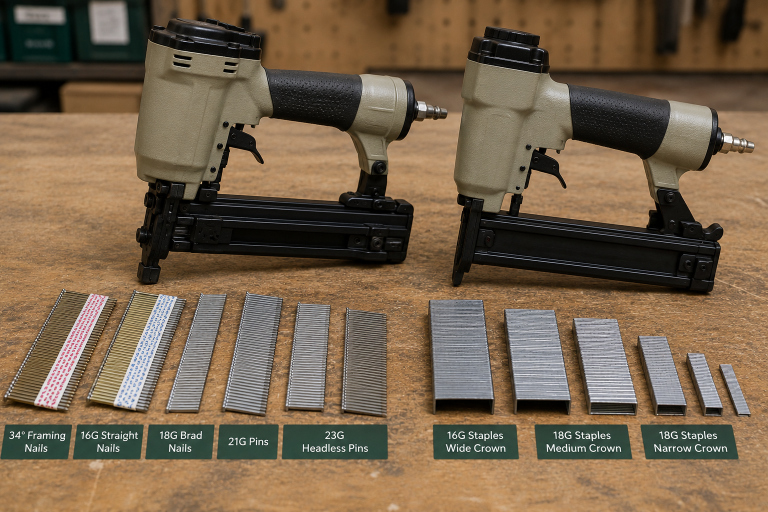
Nailers and staplers are designed for specific fastener lengths, gauges, crown widths, collation angles and collation types. If the fastener is not compatible, the tool may jam, misfeed or wear faster than it should.
Before loading the tool, check:
- Fastener length
- Gauge or wire size
- Crown size for staples
- Collation angle
- Collation type
- Tool model compatibility
A fastener that looks close enough may still cause problems if it is not right for the tool.
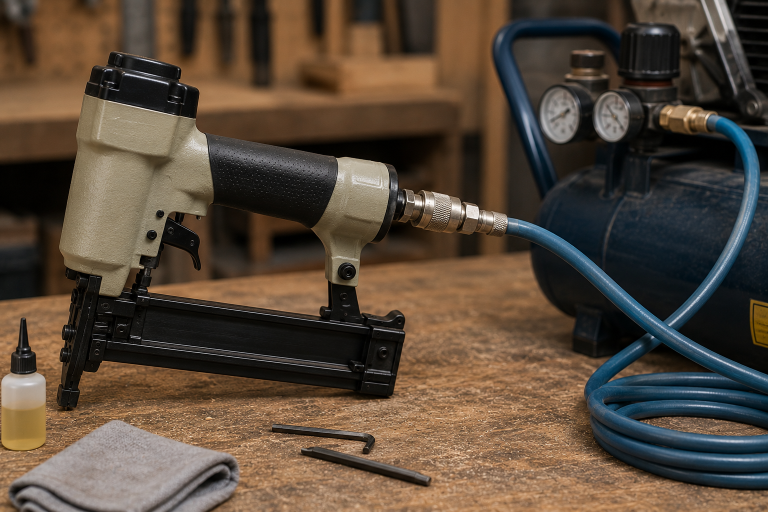
3. Oil Pneumatic Tools Correctly
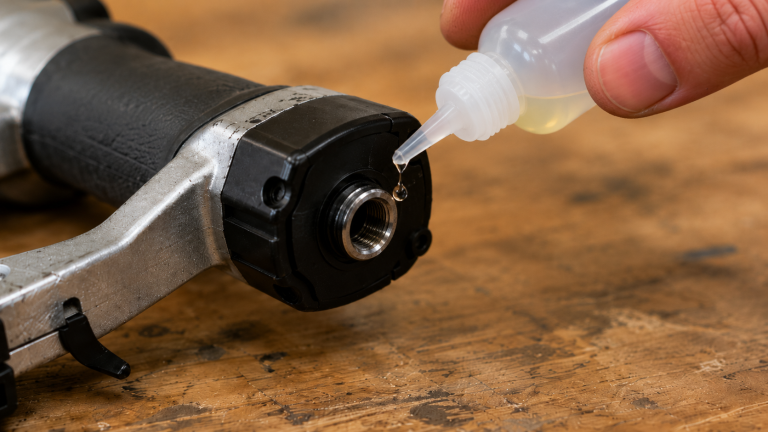
Pneumatic nailers and staplers need the right level of lubrication to keep internal parts moving smoothly.
Too little oil can lead to dry seals, weak firing and increased wear. Too much oil can attract dirt and create build-up inside the tool.
Use the correct pneumatic tool oil and follow the manufacturer’s guidance. For many air tools, a few drops in the air inlet before use is enough, but this will depend on the tool and working conditions.
Avoid using general-purpose oils or sprays, including WD-40, as a substitute for pneumatic tool oil. It may be useful for loosening or cleaning in some situations, but it is not designed for long-term lubrication inside air tools.
For the best results, always use oil specifically designed for pneumatic tools.
4. Check Air Pressure and Air Supply
Incorrect air pressure can shorten the life of a pneumatic tool.
If the pressure is too low, the tool may struggle to drive fasteners properly. If it is too high, it can overwork internal parts, overdrive fasteners and damage the material.
Check:
- Compressor pressure
- Hose condition
- Fittings and couplings
- Air leaks
- Moisture in the air line
Use the lowest pressure that drives the fastener cleanly and consistently. This protects both the tool and the finished work.
5. Don’t Ignore Small Problems
A small issue can become a bigger repair if it is ignored.
If a tool starts misfiring, leaking air, double firing or jamming more often than usual, it is worth checking early. Continuing to use a tool when something is clearly wrong can damage the driver blade, seals, bumper, magazine or nose assembly.
Look out for:
- Air leaks
- Weak firing
- Slow cycling
- Repeated jams
- Fasteners not driving fully
- Unusual noise or vibration
The earlier you identify a fault, the easier it is to prevent further damage.
6. Store Tools and Fasteners Properly
Storage plays a bigger role than many people realise.
Tools left in damp vans, dusty workshops or exposed site conditions can suffer from corrosion, dirt build-up and seal wear. Fasteners can also rust, bend or become damaged if they are not stored properly.
Good storage habits include:
- Keeping tools dry
- Storing fasteners in sealed boxes
- Avoiding damp conditions
- Keeping tools away from heavy dust where possible
- Disconnecting air supply before storage
- Removing fasteners if the tool will not be used for a while
A clean, dry storage area helps protect both the tool and the fasteners.
Quick Maintenance Checklist
Before or after regular use, check:
- Is the tool clean?
- Are the correct fasteners loaded?
- Has the tool been oiled properly?
- Is the air pressure correct?
- Are there any air leaks?
- Is the magazine feeding smoothly?
- Are fasteners stored correctly?
- Does the tool need servicing?
These simple checks can help reduce downtime and extend the working life of your nailers and staplers.
Final Thoughts
Good tool maintenance is not just about avoiding repairs. It is about keeping work moving.
A well-maintained nailer or stapler fires more consistently, reduces jams, protects the finished material and helps your team work more efficiently.
For trade users, workshops and production environments, small habits such as cleaning the magazine, using the right fasteners, oiling pneumatic tools correctly and checking air pressure can make a real difference.
At The MTK Group, we support trade professionals with practical advice, compatible fasteners and dedicated tool repair and servicing to help keep nailers, staplers and tools working as they should.
If you need help with nailer or stapler maintenance, servicing or compatible fasteners, visit our Tool Maintenance page or speak to our team about servicing, repairs or replacement parts.
Get in touch with our team on 0333 8000 345, email [email protected], or DM us on social media @theMTKgroup.