























Staples for Packaging, Pallets and Crates: Holding Strength Explained
When it comes to packaging, pallets and crates, the staple has to do more than simply hold two materials together.
It needs to cope with handling, stacking, transport and movement. In a busy packaging or pallet environment, a weak fixing can lead to loose boards, damaged packaging, wasted materials and unnecessary rework. That is why choosing the right staple matters.
At MTK, we know that holding strength is not just about using the biggest staple available. The right result comes from matching the staple to the material, the tool and the job itself.
Why Holding Strength Matters
Packaging, pallets and crates are often put under pressure long after they leave the bench.
They may be lifted, loaded, stacked, moved by forklift or transported over long distances. If the staple is too light, too short or not suited to the material, the fixing can loosen over time.
For production teams, this affects efficiency as well as quality. A poor fixing slows the job down and can lead to avoidable issues later in the process.
Key problems caused by the wrong staple include:
- Loose boards or panels.
- Staples pulling out under movement.
- Damaged packaging or crate sections.
- More rework during production.
- Inconsistent results across repeat jobs.
The right staple helps keep the process reliable from assembly through to transport.
Match the Staple to the Material
Different packaging materials need different fixing support.
Softwood pallet boards, plywood, OSB, fibreboard, cardboard, case panels and timber crate sections will not all behave in the same way. A staple that works well in one material may not give enough hold in another.
For timber packaging and crate work, heavier wire or wide crown staples are often used because they provide stronger hold and better surface coverage. For lighter packaging materials, a less aggressive staple may be more suitable to avoid tearing, splitting or damaging the surface.
Before choosing a staple, it is worth considering:
The thickness of the material.
The density of the timber or board.
Whether the joint will be under load.
How the item will be handled or transported.
Whether the staple needs to resist pull-out.
This small check at the start can save time and reduce failed fixings later.
Crown Width and Leg Length
Two of the most important parts of staple selection are crown width and leg length.
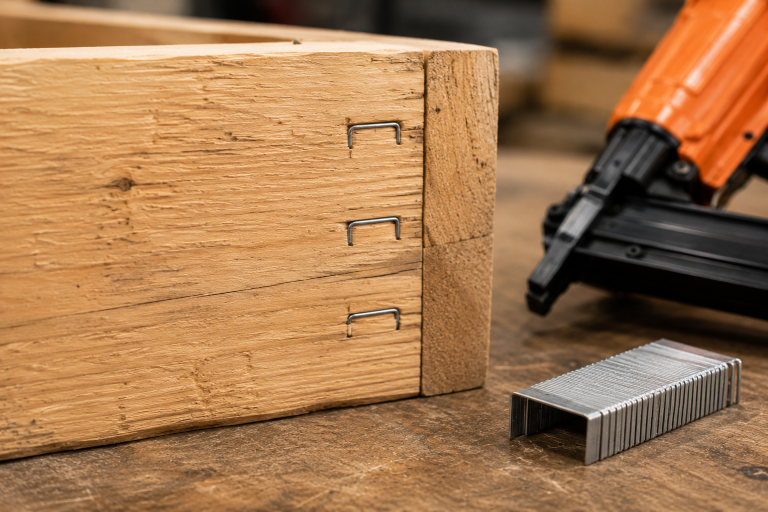
The crown is the top section of the staple. A wider crown spreads the holding force over a larger area, which can be useful in packaging, pallet and crate applications. This helps reduce the chance of the staple pulling through the material, especially where the item will be handled or moved regularly.
Leg length determines how deeply the staple penetrates into the base material. If the legs are too short, the staple may not grip properly. If they are too long, they can bend, blow through or damage the material.
A good staple should drive cleanly, sit securely and provide enough grip without causing unnecessary damage.
Wire Gauge and Strength
Wire thickness also plays a big role.
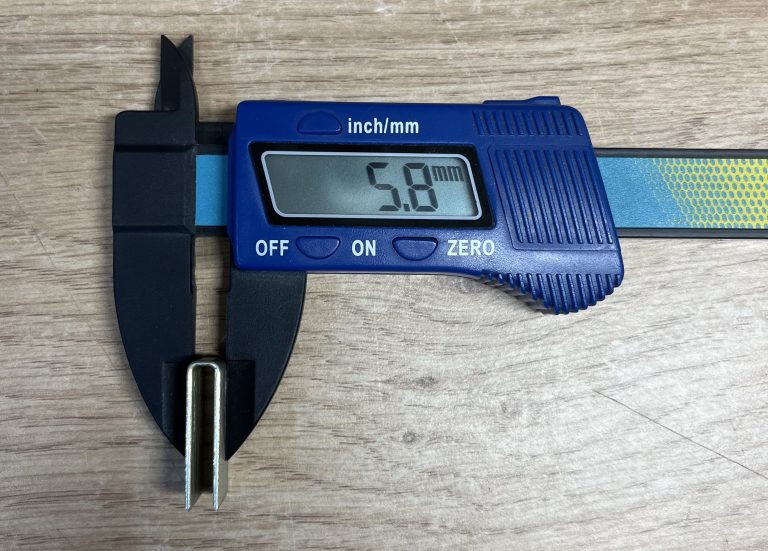
Fine wire staples are commonly used for upholstery and lighter materials, but they are usually not the right choice for heavy packaging or pallet work. For crates, pallets and industrial packaging, medium wire, heavy wire or wide crown staples are often better suited.
Heavier wire staples provide more strength, but they also require the right stapler and enough power to drive them consistently.
This is where tool compatibility becomes important. The staple may be right for the job, but if it is not right for the tool, you can quickly run into feeding issues, jams or poor drive depth.
Tool Compatibility Still Matters
Every stapler is designed to work with a specific staple type.
That includes crown width, leg length, wire gauge and staple series. Using the wrong staple can affect performance and may cause avoidable downtime.
For packaging and pallet work, where speed and repeatability matter, this is especially important. A staple that feeds smoothly and drives consistently helps keep production moving.
Before ordering staples, always check:
- The stapler model.
- The staple series.
- Accepted crown width and leg length.
- Wire gauge.
- Air pressure requirements.
- The material being fixed.
If you are unsure, it is always better to check first rather than risk buying the wrong fasteners in volume.
Efficiency Checklist for Packaging and Pallet Work
Before starting a packaging, pallet or crate job, there are a few practical points to consider.
Choose a staple that suits the material and the level of hold required. Make sure the crown width gives enough surface support, and check that the leg length provides enough bite into the base material. For heavier work, consider whether a medium wire, heavy wire or wide crown staple is more suitable.
Finally, always confirm that the staple is compatible with the stapler being used. Correct matching helps reduce jams, improve consistency and keep production moving.
By getting these details right, you can achieve stronger, cleaner and more reliable fastening across packaging and pallet applications.
Final Thoughts
Staples used in packaging, pallets and crates need to be selected with strength, material and handling in mind.
The right staple can improve holding power, reduce failed fixings and support a smoother production process. The wrong staple can lead to loose materials, damaged packaging and unnecessary downtime.
At The MTK Group, we help trade and industrial customers choose the right staples, staplers and fastener setup for packaging, pallet and case applications.
If you are unsure which staple is right for your material, tool or production setup, our team is here to help.
Get in touch with our team on 0333 8000 345, email [email protected], or DM us on social media @theMTKgroup.