























Saw Blades for MDF, Plywood and Laminate: A Cutting Guide
A clean cut makes a difference long before a panel reaches assembly.
For joinery workshops, cabinet makers, furniture manufacturers and shopfitters, chipped edges, torn veneers and rough cuts can mean extra sanding, wasted material and unnecessary rework.
MDF, plywood and laminate may all be common workshop materials, but they behave differently when cut. A blade that performs well on one may not give the same finish on another.
Choosing the right saw blade, understanding tooth configuration and keeping your cutting tools in good condition can make a difference to both finish quality and production efficiency.
Choosing the Right Saw Blade for MDF
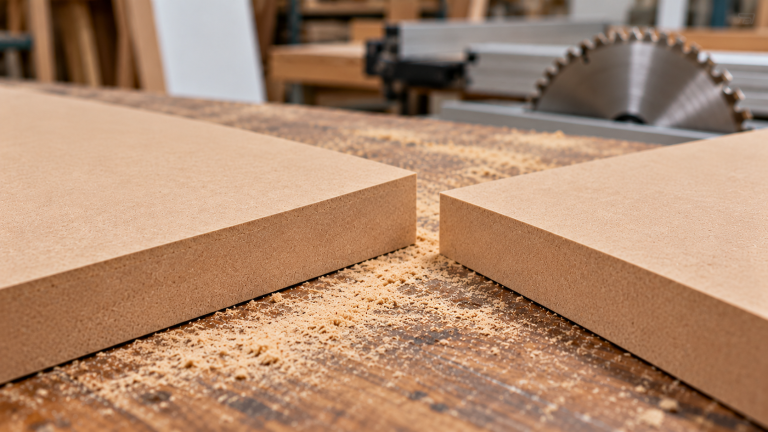
MDF is widely used for cabinets, furniture, doors, shelving and interior fit-out work.
Although it is consistent to machine, its dense structure and resin content can be abrasive on cutting edges. A dull blade can leave rough or fuzzy edges, increase cutting resistance and generate unnecessary heat.
A sharp, carbide-tipped blade designed for MDF or engineered boards is generally a good starting point.
For cleaner finishing cuts, blades with an appropriate tooth count and tooth geometry can help produce a smoother edge. Alternate top bevel (ATB) and triple-chip grind (TCG) designs are both used for MDF, depending on the cutting application and finish required.
For workshops cutting large quantities of MDF, durability matters just as much as the initial finish. A blade that stays sharp and maintains consistent cutting quality can help reduce downtime and rework.
Good dust extraction is also essential, as MDF generates fine dust during machining.
Getting a Cleaner Cut in Plywood
Plywood presents a different challenge because of its layered construction.
The grain direction changes between layers, which can cause splintering and tear-out, particularly on the outer veneer.
For cleaner cuts, a fine-tooth blade with an ATB tooth pattern is often a good choice. The angled teeth help slice through the wood fibres rather than tearing them away.
This is especially useful when cutting decorative plywood, veneered panels and cabinet components where the finished edge will remain visible.
Workpiece support matters too. If the sheet moves or vibrates during cutting, even a suitable blade may struggle to produce a clean edge.
A sharp blade, stable support and controlled feed rate can make a noticeable difference to the finished result.
Cutting Laminate Without Chipping
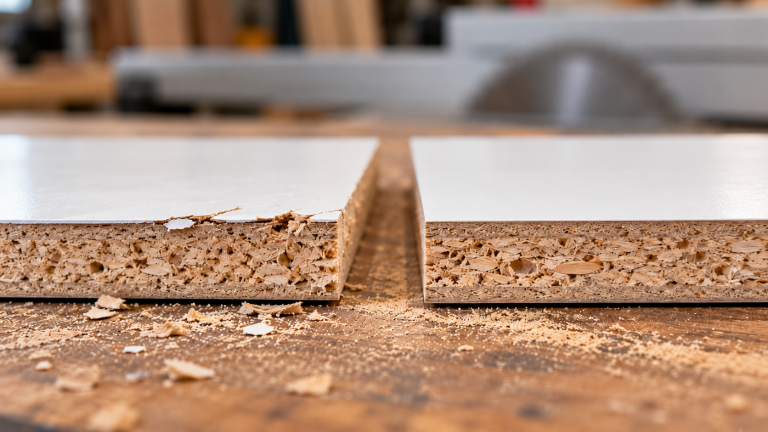
Laminate and melamine-faced boards are commonly used in kitchen cabinets, wardrobes, furniture and commercial fit-out work.
The challenge is getting through the decorative surface without chipping or breaking the edge.
For these materials, a blade with the right tooth geometry is important.
Triple-chip grind (TCG) blades are commonly used for laminate and other abrasive, coated boards because they provide a controlled cutting action and good edge durability.
Specialist high-ATB blades can also produce very clean cuts on decorative surfaces, although suitability depends on the material, machine and cutting conditions.
On suitable panel saws, a correctly adjusted scoring blade can help prevent chipping by cutting the decorative surface before the main blade passes through.
For workshops cutting large numbers of laminated panels, the right combination of main blade, scoring blade and machine setup can significantly reduce finishing work.
Tooth Count Is Not Everything
It is easy to assume that more teeth automatically mean a cleaner cut.
While a higher tooth count can help improve finish quality, it is only part of the decision.
Tooth geometry, blade diameter, kerf width, cutting speed and material all matter.
For example, a fine-tooth ATB blade may be well suited to veneered plywood, while a TCG blade may offer a better balance of cutting quality and durability for laminate-faced boards.
The blade must also match the machine. Bore size, diameter, rotation speed and other manufacturer specifications should always be checked.
The best choice is not simply the blade with the most teeth. It is the blade designed for the material, machine and type of cut.
Blade Condition and Machine Setup Matter
Even the right blade will struggle if it is blunt, damaged or poorly maintained.
Dull cutting edges can lead to rough finishes, increased resistance, burning and unnecessary strain on the machine.
In a busy workshop, this can become expensive. If a blade starts producing poor edges across a batch of panels, the cost is not just the blade itself. It is the additional finishing time, wasted material and disruption to production.
Before blaming the material, check the basics:
- Is the blade suitable for the material being cut?
- Are the cutting edges sharp, clean and free from damage?
- Is the blade correctly fitted and compatible with the machine?
- Is the sheet properly supported during cutting?
- Are the feed rate and machine settings suitable?
Regular blade inspection and timely sharpening or replacement can help maintain consistent results.
Beyond Saw Blades: Tersa and Sinus Planer Knives
In workshops that machine solid timber alongside MDF, plywood and other sheet materials, cut quality does not stop at the saw.
Planer knives also play an important role in achieving clean, consistent timber surfaces.
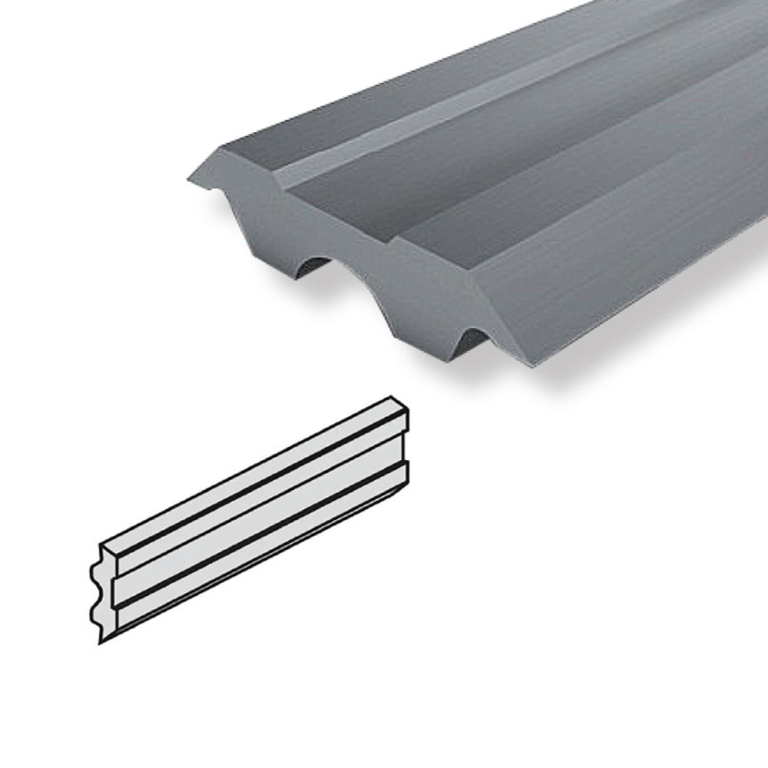
Tersa-style knives are designed for compatible Tersa cutterheads. Their reversible cutting edges and quick-change system can help reduce time spent changing knives while maintaining a consistent cutting profile.
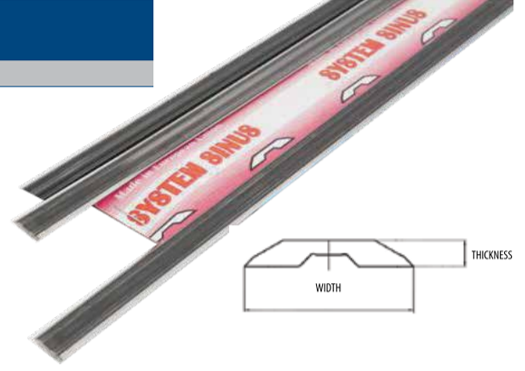
Sinus-style knives are designed for compatible Sinus planer systems and are another option for workshops carrying out timber machining and surface preparation.
These are planer knives rather than circular saw blades, and the two systems are not interchangeable.
MTK supplies saw blades alongside Tersa, Sinus and other specialist planer knives, helping workshops source cutting tools for different stages of production.
Final Thoughts
Getting a cleaner cut starts with choosing the right blade for the material.
MDF, plywood and laminate each present different challenges. The right tooth geometry, suitable machine setup and sharp cutting edges can help reduce chipping, rough finishes and unnecessary rework.
For joinery, furniture manufacturing and shopfitting, these small details can make a real difference to the quality and consistency of finished work.
At The MTK Group, we supply saw blades, planer knives and specialist cutting tools for woodworking applications.
If you are unsure which blade or knife system suits your machine and the materials you work with, speak to our team for practical advice.
Get in touch with our team, on 0333 8000 345, email [email protected], or DM us on social media @theMTKgroup, we’ll make sure you’re set up to keep production moving.