






















Common Reasons Your Nail Gun Misfires and What to Check First
A nail gun misfire can quickly slow a job down.
Whether you’re working on site, in a joinery workshop, assembling timber frames, fitting trims or completing repeat production work, a nail gun that skips, jams or fires inconsistently can cause frustration, delays and wasted materials.
In some cases, the nailer itself may need servicing. But very often, nail gun misfires are caused by something much simpler: the wrong fasteners, poor feeding, incorrect air pressure, lack of cleaning or a small setup issue.
Before assuming your nail gun is faulty, there are a few practical checks worth making first.
Safety First
Before checking any nail gun, always make sure the tool is safe.
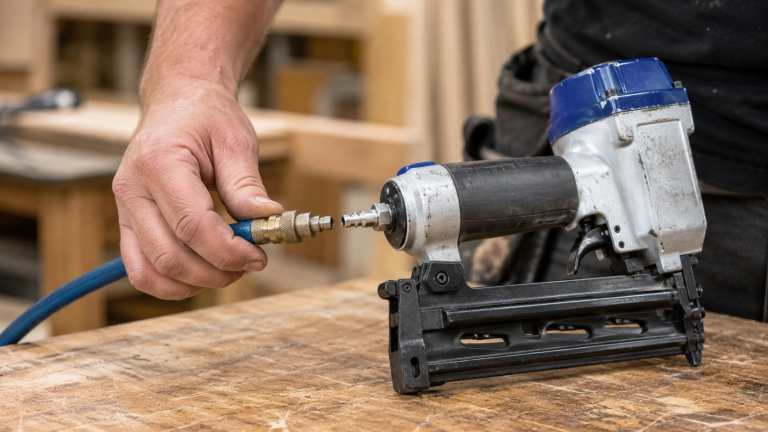
Disconnect the air supply, remove the battery or gas cell if applicable, and take out any remaining fasteners from the magazine. Never inspect the nose, magazine or driver area while the tool is still connected or ready to fire.
A misfiring nail gun can still be dangerous if pressure, power or a trapped fastener remains inside the system.
You’re Using the Wrong Fasteners
One of the most common reasons for nail gun misfires is fastener compatibility.
Nail guns are designed to work with specific fastener lengths, gauges, collation angles and collation types. A nail may look similar, but if it is slightly wrong for the tool, it can cause feeding issues, jams, weak firing or inconsistent performance.
This often happens when users switch between brands, reorder without checking the tool model, or choose nails based only on length rather than the full specification.
What to check:
- Is the nail gauge correct?
- Is the collation angle right?
- Is the nail length within the tool’s range?
- Is it the correct collation type: plastic, paper or wire?
- Are the fasteners damaged, bent or poorly stored?
If the fastener is wrong, the tool will struggle to perform properly, even if the nail gun itself is in good condition.
At MTK, this is one of the first things we help customers check when they contact us about a nail gun not firing properly.
The Magazine Is Not Feeding Properly
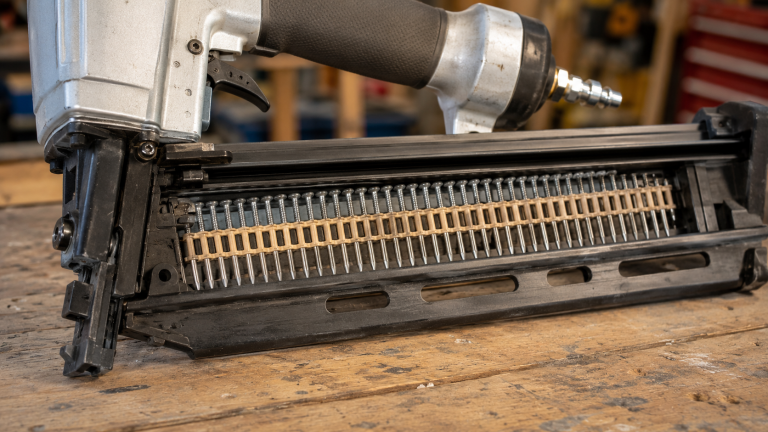
If your nail gun fires once or twice and then stops, the issue may be with the magazine feed.
The magazine needs to move each nail cleanly into position before the tool fires. If the fastener strip is damaged, the pusher is not moving freely, or there is dust and debris inside the magazine, the tool may cycle without firing a nail.
Common signs include:
- The tool fires air but no nail comes out
- Nails sit loose or out of line
- The nail strip does not move forward smoothly
- The tool works briefly after reloading, then stops again
If your nail gun is firing air but no nail, open the magazine and check that the nails are seated correctly. Look for broken collation, trapped debris or anything preventing the fasteners from feeding forward.
There Is a Jam in the Nose
A jammed nail in the nose is another common cause of nail gun jamming or misfiring.
This usually happens when a nail feeds incorrectly and becomes trapped near the driver blade. Once this happens, the next nail cannot move into the firing position properly, and the tool may stop firing or begin cycling inconsistently.
After making the tool safe, inspect the nose area carefully. Look for:
- A bent nail
- Broken collation material
- Timber dust or debris
- Signs of repeated jamming
- Damage around the driver channel
If the tool has a jam-clearing mechanism, use it as instructed by the manufacturer. Avoid forcing the nose open or hitting the tool to release a jam, as this can cause further damage.
The Air Pressure Is Incorrect
For pneumatic nail guns, air pressure plays a major role in performance.
If the pressure is too low, the tool may not have enough force to drive the nail properly. If the pressure is too high, it can overdrive nails, damage the material and increase wear inside the tool.
The aim is not always to use more pressure. The aim is to use the correct pressure for the tool, fastener and material.
What to check:
- Is the compressor set within the tool’s recommended range?
- Is the hose connected properly?
- Are there any air leaks?
- Is the compressor keeping up during repeated firing?
- Are nails being overdriven or left proud?
As a general rule, use the lowest pressure that drives the nail cleanly and consistently. This helps protect both the tool and the finished work.
If you are constantly increasing pressure just to get the nail to drive properly, the issue may not be pressure alone. It could be the fastener, material, driver blade, seal condition or tool maintenance.
The Tool Needs Cleaning or Lubrication
Nail guns are often used in dusty, demanding environments.
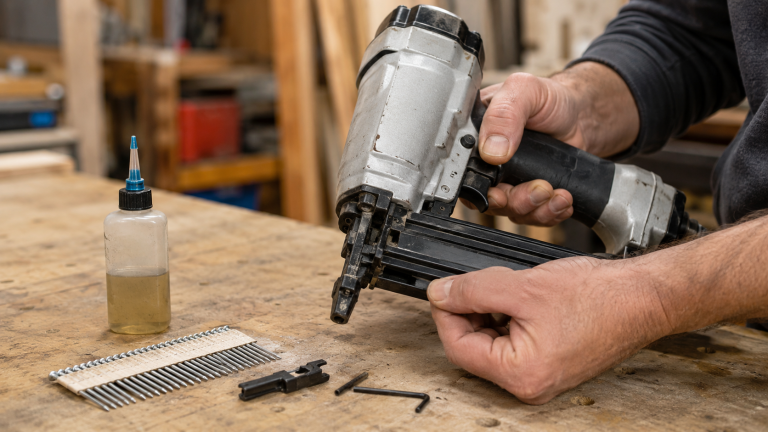
Over time, timber dust, dirt, broken collation material and general workshop debris can build up around the nose and magazine. Pneumatic tools also need the right level of lubrication to keep internal parts moving smoothly.
A dry or dirty tool may start to fire weakly, jam more often or cycle inconsistently.
What to check:
- Has the tool been cleaned recently?
- Is there dust or debris around the nose?
- Is the magazine rail clean?
- Has the tool been oiled correctly?
- Is the air supply clean and dry?
Regular nail gun maintenance can make a big difference, especially for tools used daily in busy workshops or on site.
Internal Parts May Be Worn
If you have checked the fasteners, magazine, air pressure and basic cleaning but the tool still misfires, there may be internal wear.
Parts such as seals, O-rings, bumpers and driver blades wear over time. This is especially common with tools that are used heavily or have not been serviced for a while.
Signs of internal wear include:
- Air leaking from the tool
- Weak firing
- Slow cycling
- Nails not driving fully
- Frequent jams with the correct fasteners
- Inconsistent firing even after cleaning
At this stage, it is usually worth having the tool inspected properly rather than continuing to use it and risking more damage.
Quick Nail Gun Troubleshooting Checklist
Before assuming your nail gun is faulty, check the basics:
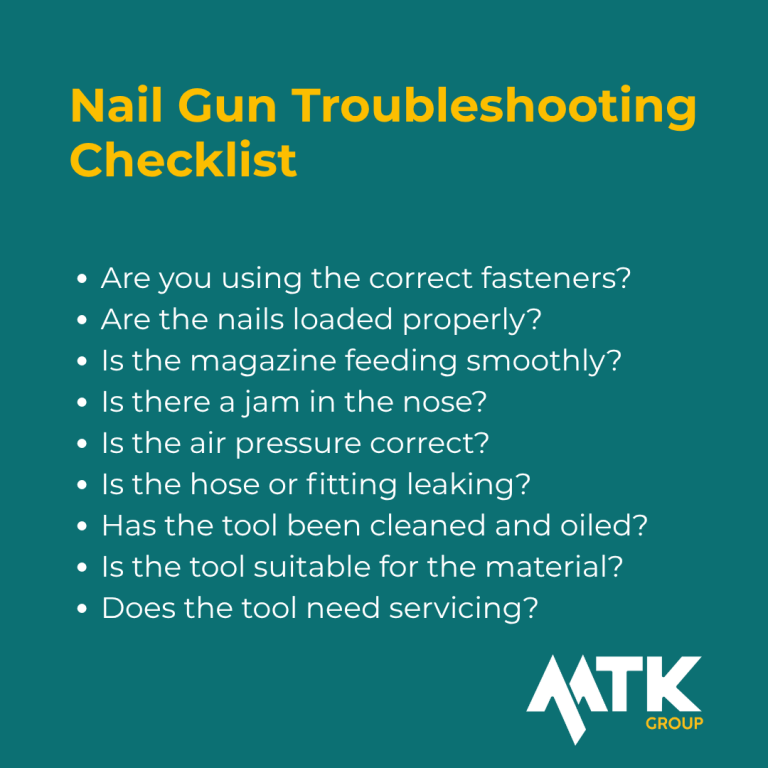
In many cases, one of these checks will point you in the right direction.
Final Thoughts
A nail gun misfire does not always mean the tool is broken.
Often, the cause is something simple: the wrong fastener, a feeding issue, incorrect pressure, a jam or lack of maintenance. Checking these areas first can save time, reduce frustration and help keep the job moving.
The right tool, the right fastener and the right setup all work together. When one part is wrong, performance suffers.
At The MTK Group, we help trade professionals choose compatible fasteners, troubleshoot tool issues and keep their work moving with practical, real-world advice.
If you’re unsure what’s causing your nail gun to misfire, our team is here to help.
Let us help you succeed. Contact our team for expert advice, tailored recommendations, and support that keeps your projects moving efficiently.
Get in touch with our team on 0333 8000 345, email [email protected], or DM us on social media @theMTKgroup.