





















Choosing the Right Fastener Finish for Outdoor Timber Projects
When you are working with outdoor timber, the fastener finish matters just as much as the nail size, shank type or tool being used.
A fixing that works well indoors may not be suitable outside. Once timber is exposed to moisture, changing weather, treatment chemicals or natural acids in the wood, the wrong fastener can start to corrode, stain the timber or lose holding strength over time.
For fencing, cladding, sheds, garden buildings, decking, landscaping and exterior joinery, choosing the right finish helps protect the job long after it has left the workshop or site.
At MTK, we know that fastener choice is not just about what will fire through the tool. It is about what will hold, last and suit the material being fixed.
Why Fastener Finish Matters Outside
Outdoor timber fixings are exposed to conditions that internal fixings do not usually face.
Rain, humidity, condensation and temperature changes can all affect the fastener. Treated timber can also react with some metals, while certain species of timber are naturally more likely to cause staining or corrosion if the wrong fixing is used.
Using the wrong finish can lead to:
- Rust marks on visible timber.
- Premature corrosion.
- Weakening of the fixing over time.
- Staining around the nail head.
- Callbacks or remedial work.
- A poor finish on cladding, fencing or garden buildings.
For trade users, the issue is not only appearance. If the fixing fails earlier than expected, the job can quickly become more expensive than using the correct fastener in the first place.
Bright Nails: Best Kept for Internal Work
Bright nails are uncoated steel nails.
They are useful for many internal applications where moisture exposure is not a concern. However, they are not usually suitable for outdoor timber projects because they have no protective coating against corrosion.
If bright nails are used externally, they can rust quickly, especially when exposed to rain or damp conditions. This can cause staining on the timber and reduce long-term performance.
For outdoor use, bright nails should generally be avoided unless the application is temporary and corrosion is not a concern.
Galvanised Nails: A Step Up for Protection
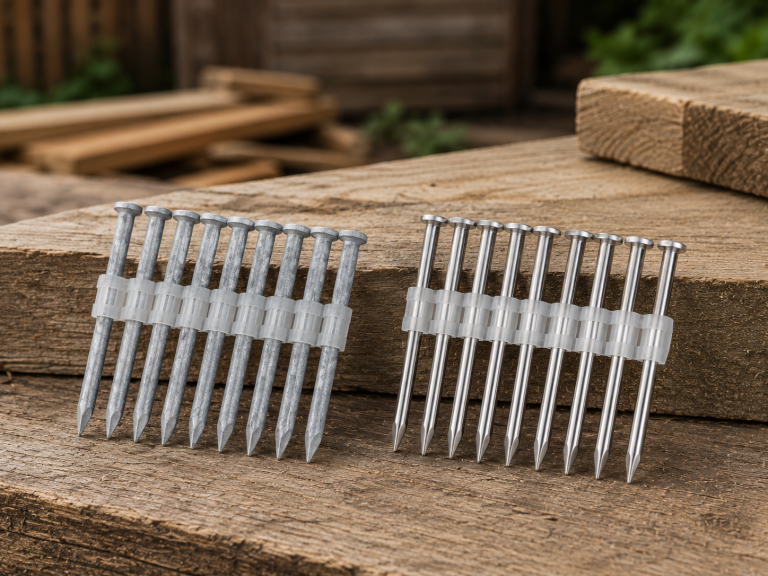
Galvanised nails have a zinc coating that helps protect the steel from corrosion.
They are commonly used in outdoor and construction applications where some moisture resistance is needed. For many general external timber jobs, galvanised nails can provide a better level of protection than bright nails.
However, not all galvanised finishes are the same. The level of protection depends on the type and thickness of the coating, the environment and the timber being fixed.
For light external use or applications with limited exposure, galvanised nails may be suitable. But for harsher environments, treated timber or jobs where longevity matters, a stronger finish may be needed.
Hot Dipped Galvanised Nails for Tougher Outdoor Use
Hot dipped galvanised nails are coated in a thicker layer of zinc than many standard electro galvanised nails.
This makes them a stronger option for outdoor timber work, particularly where the fixing will be exposed to weather or where longer-term corrosion resistance is important.
Hot dipped galvanised nails are often used for:
- Fencing.
- Garden buildings.
- Sheds.
- External timber frames.
- Landscaping timber.
- Pallets and outdoor packaging.
- General exterior construction.
The thicker coating gives better protection, but the finish can also be slightly rougher. That may not matter for structural or hidden applications, but it is worth considering on visible finish work.
Stainless Steel for Maximum Corrosion Resistance
For the highest level of corrosion resistance, stainless steel fasteners are often the best choice.
Stainless steel nails and staples are especially useful where the timber is exposed to moisture, where staining would be unacceptable, or where the timber species may react with standard steel or galvanised fixings.
They are commonly used for:
- Cedar cladding.
- Oak and other tannin-rich timbers.
- Coastal or high-moisture environments.
- Visible exterior timber.
- Premium garden buildings.
- External joinery where appearance matters.
Stainless steel costs more than galvanised options, but it can be the right choice when long-term performance and appearance are important.
A Note on Cedar
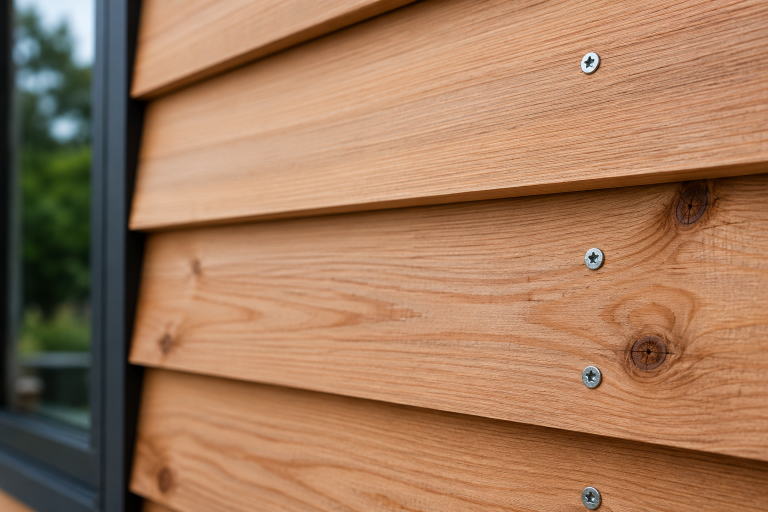
Cedar needs particular care when choosing fixings.
Because cedar contains natural oils and acids, it can react badly with the wrong metal fasteners. Standard steel or unsuitable coated fixings may cause dark staining around the fixing point, which can spoil the appearance of cladding, fencing or other visible timber work.
For cedar, stainless steel is strongly recommended.
This helps reduce the risk of corrosion and staining, especially on visible external timber where the finish matters. If you are working with cedar cladding or any high-value exterior timber, it is worth choosing the correct fixing from the start rather than trying to correct staining later.
Matching the Finish to the Application
For dry internal timber work, usually Service Class 1, a bright nail may be suitable where there is little risk of moisture. This would apply to internal joinery, dry timber framing, furniture work or other protected indoor applications.
For sheltered or partly protected timber, often Service Class 2, it is better to move up to a galvanised nail. This gives more protection where the timber may face occasional moisture, higher humidity or temperature changes, such as sheds, covered garden buildings or sheltered external timber.
For fully exposed outdoor timber, usually Service Class 3, a stronger corrosion-resistant finish is needed. In these conditions, hot dipped galvanised nails are often the better choice for fencing, garden buildings, decking substructures and other external timber work.
Where the timber is highly exposed, visible, treated, or naturally reactive, stainless steel nails are often the safest option. This is especially important with timber such as cedar, where the wrong fastener can react with the timber and cause staining.
So, as a simple guide: bright for dry internal work, galvanised for sheltered or occasional moisture, hot dipped galvanised for exposed outdoor use, and stainless steel where corrosion resistance and appearance matter most.
Quick Checklist Before Choosing Outdoor Fixings
Before selecting fasteners for an outdoor timber project, check:
- What timber species are you fixing?
- Is the timber treated?
- Will the fixing be exposed to rain or moisture?
- Is the fixing visible?
- Could staining be an issue?
- Is the job in a coastal or high-moisture environment?
- Do you need galvanised, hot dipped galvanised or stainless steel?
- Is the fastener compatible with your nailer or stapler?
These checks help avoid common problems and keep the finished job looking and performing as it should.
Final Thoughts
Outdoor timber projects need fixings that are suited to the environment.
Bright nails may be fine for internal work, but outdoor applications usually need a more protective finish. Galvanised nails offer a level of corrosion resistance, hot dipped galvanised nails provide stronger protection for many external jobs, and stainless steel is the best choice where corrosion resistance and appearance are critical.
For cedar in particular, stainless steel should be the preferred option to reduce the risk of staining and corrosion.
At The MTK Group, we help trade professionals choose the right fasteners for timber, fencing, cladding, sheds, garden buildings and other outdoor applications. If you are unsure which finish is right for your material or tool, our team can help you match the correct fixing to the job.
Get in touch with our team on 0333 8000 345, email [email protected], or DM us on social media @theMTKgroup.