



















Repair or Replace? When Is Your Nailer or Stapler Worth Fixing?
A nailer or stapler that stops working properly can create a difficult decision.
Do you get it repaired, or is it time to replace it completely?
For busy joiners, upholsterers, construction teams, workshop managers and production users, the answer is not always obvious. A faulty tool can slow down the job, waste fasteners, damage materials and cause unnecessary downtime. But replacing a tool too quickly can also mean spending more than you need to.
In many cases, a nailer or stapler can be repaired, serviced and put back to work. In other cases, replacement may be the more practical long-term option.
The key is knowing what to look for before making the decision.
Start with the Type of Problem
Before deciding whether to repair or replace the tool, look at what is actually going wrong.
Some faults are relatively simple. Others may suggest deeper wear or damage inside the tool.
Common problems include:
- Tool not firing
- Air leaking from the tool
- Frequent jams
- Weak firing
- Fasteners not driving fully
- Double firing
- Trigger problems
- Magazine feed issues
- Damaged nose or driver blade
- Inconsistent performance
A single issue does not always mean the tool is finished. For example, a nailer that is not firing may simply need the correct fasteners, better air pressure, cleaning or replacement seals. A stapler that keeps jamming may have a feed issue rather than a major internal fault.
This is why a proper inspection is important before deciding to replace the tool.
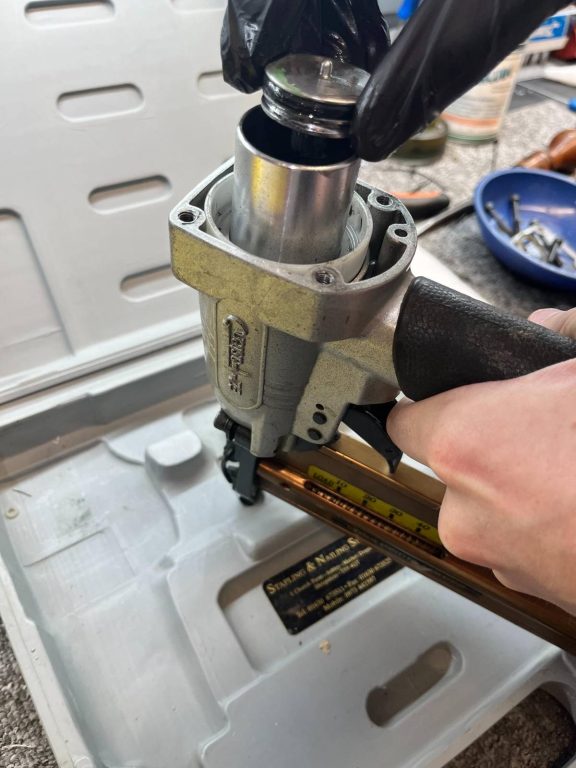
When a Repair Is Usually Worth Considering
Repairing the tool often makes sense when the main body, magazine and key components are still in good condition.
If the tool is a quality model, used regularly, and the fault is caused by normal wear, servicing may be the most cost-effective option. This is especially true for professional users who rely on the same tool every day and already know it suits their work.
Repair is often worth considering if:
- The tool is a good-quality trade model
- The issue is linked to seals, O-rings or general wear
- The driver blade or bumper can be replaced
- The magazine and main body are still in good condition
- The tool has been reliable until recently
- Replacement parts are available
- The repair cost is sensible compared with buying new
For pneumatic nailers and staplers, many faults are caused by worn internal parts. Seals, O-rings, bumpers, springs and driver blades all wear over time. Replacing these parts can often restore the tool’s performance without needing to buy a new one.
For workshop teams and repeat users, this can help reduce downtime and control costs.
When Servicing May Be All That Is Needed
Not every tool problem requires a full repair.
Sometimes, a nailer or stapler simply needs cleaning, lubrication and adjustment. Tools used in dusty workshops, on site, or in high-volume production can gradually build up timber dust, collation debris, adhesive residue and general dirt.
Over time, this can affect firing consistency and feed performance.
A service may help if:
- The tool fires inconsistently
- Fasteners are not feeding smoothly
- The tool feels sluggish
- The nose or magazine is dirty
- The tool has not been maintained for a long time
- Air performance has gradually reduced
- Jams are becoming more frequent
Regular servicing can also help identify small problems before they become bigger, more expensive faults.
For businesses using nailers and staplers every day, planned servicing is often better than waiting until the tool fails in the middle of a job.
When Replacement May Be the Better Option
There are times when repairing a tool is not the best use of money.
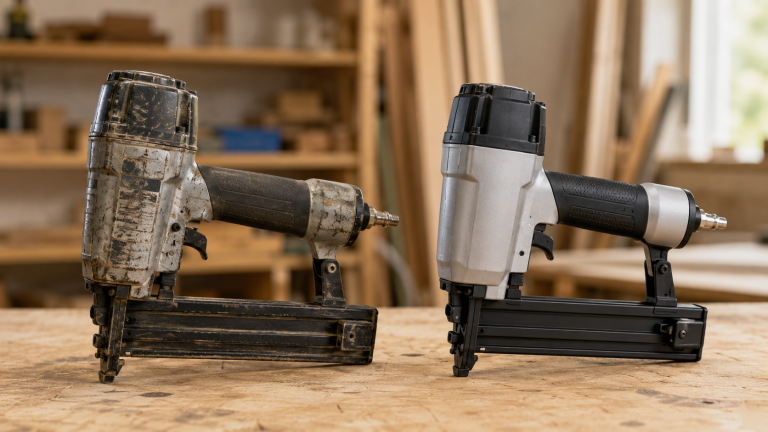
If the tool is heavily damaged, very old, low-quality or no longer suited to the work being done, replacement may be more practical. This is especially true if parts are difficult to source, the same fault keeps returning, or the cost of repair is too close to the cost of a new tool.
Replacement may be the better choice if:
- The main body or casting is cracked
- The magazine is badly damaged
- Parts are no longer available
- The tool has repeated faults after previous repairs
- Repair costs are too high compared with a new tool
- The tool is not suitable for your current workload
- The tool regularly causes downtime
- A newer model would improve speed, safety or efficiency
A tool that constantly interrupts work can cost more than its repair value. For production workshops, construction teams and busy trade users, reliability matters as much as purchase price.
If a tool is costing time every week, replacing it may be the better long-term decision.
Consider the Cost of Downtime
When deciding whether to repair or replace, the tool cost is only part of the decision.
Downtime also matters.
If a nailer or stapler fails during a job, it can delay production, hold up installation work, waste labour time and cause pressure on the rest of the team. For businesses working to deadlines, even a small tool problem can have a bigger impact than expected.
Ask yourself:
- How often is the tool used?
- Is it essential to daily work?
- Does the team have a backup tool?
- How much time is lost when it fails?
- Is the fault affecting finish quality?
- Could a repair prevent future delays?
For occasional use, a basic repair may be enough. For daily trade use, reliability should carry more weight in the decision.
Check Whether the Tool Still Matches the Job
Sometimes the problem is not just the condition of the tool. It may be that the tool no longer matches the work being done.
A stapler that was suitable for light upholstery may not be right for heavier production work. A nailer used for occasional trim work may not be the best choice for high-volume workshop use. A tool that frequently struggles may be underpowered, overworked or being used with the wrong fasteners.
Before repairing, consider:
- Is the tool designed for the type of work you now do?
- Is it suitable for the fasteners you use most often?
- Does it handle your current volume of work?
- Is it compatible with the materials you regularly fix?
- Would a different tool improve productivity?
If the tool still suits the job, repair may be worthwhile. If the job has changed, replacement may be a better opportunity to upgrade to something more suitable.
Don’t Overlook Fastener Compatibility
A tool fault is not always a tool fault.
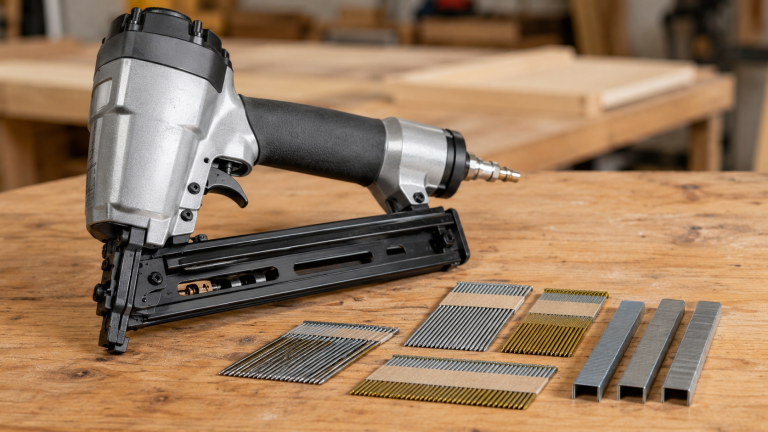
Many issues that look like repair problems are caused by incorrect or poor-fitting fasteners. If the nail or staple is the wrong gauge, length, crown, collation angle or collation type, the tool may jam, misfire or feed inconsistently.
Before sending a tool for repair, check:
- Are the fasteners correct for the tool model?
- Are they within the tool’s accepted length range?
- Is the collation type correct?
- Are the strips or coils damaged?
- Are the fasteners stored properly?
- Has the issue started after changing fastener brand or size?
Using the right fasteners helps protect the tool and improves performance. It can also prevent unnecessary repairs.
This is one of the most common checks worth making before assuming the tool itself has failed.
Quick Repair or Replace Checklist
Before deciding, ask:
- Is the tool a quality trade model?
- Are replacement parts available?
- Is the main body still in good condition?
- Has the tool been reliable until now?
- Is the repair cost sensible?
- Is the fault caused by normal wear?
- Is the tool still suitable for your work?
- Is downtime becoming a regular problem?
- Are you using the correct fasteners?
- Would a replacement improve productivity?
If most of the tool is still sound and the fault is repairable, servicing or repair may be the right choice. If the tool is worn out, unreliable or no longer suitable, replacement may save more time and money in the long run.
Final Thoughts
A faulty nailer or stapler does not always need replacing.
In many cases, a repair or service can bring the tool back to reliable working condition, especially if the issue is caused by worn seals, O-rings, driver parts, dirt build-up or normal trade use.
However, if the tool is badly damaged, repeatedly failing or no longer suited to the job, replacement may be the more practical option.
The best decision comes from looking at the condition of the tool, the cost of repair, the availability of parts, the impact of downtime and how important the tool is to your daily work.
At The MTK Group, we help trade professionals keep their nailers, staplers and pneumatic tools working properly. Whether you need practical advice, compatible fasteners, replacement parts or tool repair support, our team is here to help you make the right decision.
If you’re unsure whether your nailer or stapler is worth repairing, speak to the MTK team.
Get in touch with our team, on 0333 8000 345, email [email protected], or DM us on social media @theMTKgroup, we’ll make sure you’re set up to keep production moving.