



















Planer Blade Materials Explained: How to Choose the Right Steel for the Job
Selecting the right planer blade isn’t just a technical detail, it directly affects finish quality, productivity, and how often you’re stopping to change or sharpen blades. The material behind the cutting edge determines durability, heat resistance, and how well the blade copes with knots, hardwoods, and long production runs.
Choose correctly, and you’ll get cleaner cuts and longer edge life. Choose poorly, and you’ll lose time to premature wear and inconsistent results.
Here’s a practical breakdown of the most common planer blade materials used across joinery workshops and trade environments.
High-Speed Steel (HSS): The Trusted All-Rounder
High-speed steel remains the go-to choice for many joiners and woodworking professionals. It’s tough, dependable, and can be re-sharpened multiple times, making it cost-effective for busy workshops.
However, not all HSS is the same.
18% HSS (High Cobalt Content)
Blades described as 18% HSS contain a high level of cobalt. This improves resistance to heat build-up, allowing the blade to maintain its edge during prolonged use or when machining hardwoods.
Best suited for:
-
Mixed softwood and hardwood applications
-
Continuous workshop use
-
Trades who regularly re-sharpen blades
It’s a strong choice where durability and edge retention matter without stepping into carbide pricing.
M2 HSS: Reliable Everyday Performance
M2 is a widely used grade of high-speed steel and is often considered the industry standard for general woodworking.
It offers:
-
Solid toughness
-
Good heat resistance
-
Easy re-sharpening
-
Cost-effective performance
For routine planing tasks and general joinery work, M2 provides a dependable balance between performance and price.
Best suited for:
-
General site and workshop planing
-
Softwood and moderate hardwood use
-
Trades looking for dependable value
M42 HSS: Extended Edge Life
M42 is an upgraded HSS grade with added cobalt (typically around 8%). This improves hot hardness — meaning the blade retains its sharpness longer under higher temperatures.
In real terms, that means:
-
Cleaner finishes on dense hardwoods
-
Longer production runs
-
Reduced blade change frequency
Best suited for:
-
Hardwood machining
-
Heavy-duty use
-
Workshops prioritising finish quality and uptime
Bi-Metal M42: Strength Meets Durability
Bi-metal planer blades combine an M42 cutting edge with a more flexible backing material. This layered construction improves shock absorption and reduces the risk of cracking or snapping when encountering knots or inconsistent grain.
You get the wear resistance of M42, with improved toughness underneath.
Best suited for:
-
Timber with knots or irregular grain
-
High-volume workshop environments
-
Trades wanting extended blade life with added resilience
Trimetal Blades: Built for Stability
Trimetal blades are engineered using three bonded layers, often incorporating a softer central layer to absorb vibration and dissipate heat. This design improves stability and reduces stress fractures during intensive machining.
While more common in industrial settings, they can offer significant advantages where precision and heat control are critical.
Best suited for:
-
High-precision machining
-
Heat-intensive applications
-
Industrial or high-output environments
Tungsten Carbide Tipped (TCT): Maximum Wear Resistance
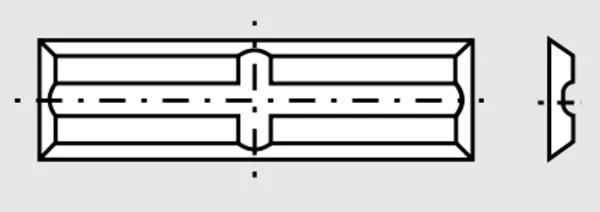
TCT (tungsten carbide tipped) blades use a hardened steel body with carbide tips brazed onto the cutting edge. Carbide is significantly harder than HSS, delivering exceptional wear resistance and much longer edge life.
This makes TCT blades ideal for:
-
Abrasive materials
-
Engineered boards (MDF, laminated panels, composites)
-
Long production runs
However, carbide is more brittle than steel. Striking metal or heavy knots can cause chipping, and sharpening requires specialist equipment.
Best suited for:
-
Engineered timber and sheet materials
-
High-output workshops
-
Trades prioritising longevity over re-sharpen convenience
Choosing the Right Planer Blade for Your Work
There’s no universal “best” blade — it depends on the materials you’re machining and how your workshop operates.
The right blade depends on your priorities:
- Everyday general planing: M2 HSS or 18% HSS
- Hardwood machining or heavy use: M42 HSS
- Knots or unpredictable timber: Bi-metal M42
- High-precision or high-heat work: Trimetal
- Abrasive or engineered boards, long production runs: TCT
Ultimately, it comes down to balancing edge life, toughness, and cost for the type of work you do. There’s no single perfect blade — just the one that matches your job and workflow.
Choosing the right planer blade doesn’t have to be complicated. Understanding the materials helps you plan better, reduce downtime, and get a clean, consistent finish every time. Whether you’re a joiner, upholsterer, roofer, or general trade professional, picking the right blade is one of the simplest ways to make your work smoother, faster, and more efficient.
If you need help choosing the right planer blade for your trade, our team can guide you to the best option for performance, durability, and precision.
Call us on 0333 8000 345, email [email protected], or DM us on social media @theMTKgroup.